Leave Your Message
Please agree to this agreement

China Top Plastic Synthetic Thatch Manufacturers?

China’s Plastic Synthetic Thatch industry serves resorts, garden structures, restaurants, theme parks, and coastal developments worldwide. These products imitate natural thatch while offering more consistent dimensions, easier maintenance, and longer service potential. However, appearance alone does not prove quality.

Industry reports provide useful market context. Grand View Research identifies growing demand for synthetic and polymer-based roofing materials, supported by renovation, tourism, and outdoor-living investment. The Freedonia Group also reports continued interest in lightweight roofing products that reduce maintenance and installation complexity. These reports do not rank Plastic Synthetic Thatch manufacturers directly. That limitation matters.

A credible supplier assessment should examine production experience, material formulation, testing, and export performance. Reputable Chinese manufacturers commonly use HDPE, PVC, or blended polymers with UV stabilizers. Buyers should request test evidence for color retention, tensile strength, wind resistance, and water behavior. ASTM G154 and ISO 4892-3 can guide accelerated weathering evaluations. Fire performance may require testing under standards such as EN 13501-1 or relevant local codes.

Details reveal practical quality. Check whether roof panels remain flexible after repeated sunlight exposure. Inspect how securely simulated straw fibers connect with the backing layer. Ask for batch records, installation drawings, warranty terms, and independent laboratory reports. A factory visit can expose inconsistent thickness or weak packaging.

There is no universally accepted “top” ranking. Export volume can be impressive, yet after-sales support may remain weak. Therefore, this guide compares China’s leading Plastic Synthetic Thatch manufacturers through measurable evidence, not promotional claims. Some conclusions may remain imperfect because supplier data changes and private factories disclose limited information. That uncertainty deserves careful reflection.
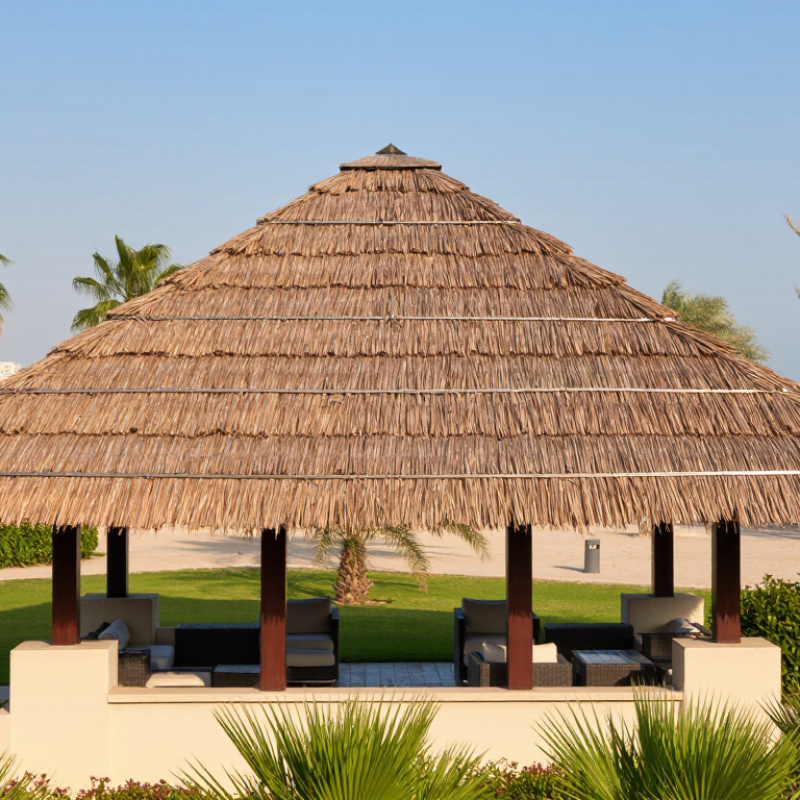
China Top Plastic Synthetic Thatch Manufacturers?

What Are Plastic Synthetic Thatch Products?

Plastic synthetic thatch products are manufactured roofing elements designed to imitate natural thatch. They usually use HDPE, PVC, or polypropylene, with molded strands, layered panels, or interlocking tiles. UV stabilizers help reduce fading and brittleness under strong sunlight. Some products also include aluminum clips, backing sheets, or drainage channels. They are lighter than many traditional roofs and can create a dry, textured appearance.

Performance depends on more than appearance. A serious specification should state wind resistance, water absorption, UV exposure results, and fire classification. Testing may refer to recognized ASTM, EN, or national construction standards. The OECD’s Global Plastics Outlook reported that only about 9% of plastic waste was recycled worldwide from 2000 to 2019. That figure matters here. A synthetic thatch roof is not automatically sustainable. Its service life, recycled content, repairability, and end-of-life route should be checked.

Plastic roofing can reduce frequent replacement in humid or insect-prone settings. It also avoids the rapid biological decay associated with untreated grass thatch. Still, heat buildup beneath dark panels can be uncomfortable in tropical buildings. Ventilation is essential. Product descriptions sometimes promise too much. Buyers should request test reports, installation guidance, and batch consistency records from manufacturers in China. A small sample may look convincing, yet full panels can reveal uneven color, weak edges, or excessive plastic odor. These practical details deserve attention before large-scale purchasing.
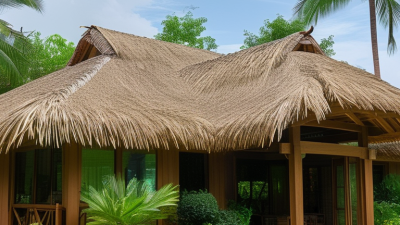
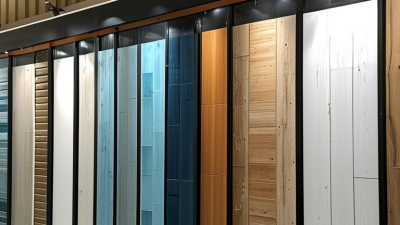
How Are Synthetic Thatch Manufacturers in China Classified?

Chinese synthetic thatch manufacturers are commonly classified by material, structure, application, and production capability. This approach helps buyers compare factories beyond attractive catalog photographs.


Material-focused producers usually work with HDPE, PVC, or blended polymers. Each material affects color stability, flexibility, weather resistance, and maintenance needs. Some factories form individual leaves through injection molding, while others use extrusion, weaving, or layered assembly. These structural differences influence roof appearance, drainage, installation speed, and service life. In practical factory evaluations, I check sample consistency, edge finishing, attachment points, and color changes after outdoor exposure. Marketing claims alone are not enough.

Application-focused manufacturers supply products for resorts, restaurants, garden structures, commercial buildings, or residential projects. Their designs may vary in density, profile, weight, and fire-performance documentation. Factories with stronger technical capability often provide custom colors, modular panels, installation guidance, and batch records. Quality classification should also consider UV testing, waterproofing checks, production traceability, and independent laboratory reports. Documentation matters.

A manufacturer may fit several categories at once. This classification is useful, but incomplete. Smaller workshops can sometimes produce excellent samples, yet struggle with large orders or consistent packaging. Large factories may offer stable output, but their customization process can feel less flexible. Buyers should verify production capacity through samples, inspection records, material data, and realistic lead-time discussions before making a decision.

Which Materials and Production Methods Do They Use?

China’s top plastic synthetic thatch manufacturers usually work with HDPE, PP, PVC, or blended polymer fibers. HDPE offers strong impact resistance and stable outdoor performance. PP is lighter and easier to process. PVC can provide sharper color retention, but plasticizers may affect long-term flexibility.

PlasticsEurope’s Plastics—The Fast Facts 2023 reported 400.3 million tonnes of global plastics production in 2022. This scale supports wide material access, yet it also raises recycling questions. Better manufacturers specify resin grades, UV stabilizers, and recycled content instead of using vague terms like “eco-friendly.”

Production often starts with extrusion. Polymer pellets are melted, pushed through narrow dies, and formed into flat strips or grass-like filaments. These strips may be embossed, twisted, or brushed to imitate dried reed texture. Injection molding creates connectors, tiles, and hidden fixing parts. Some factories then assemble layers over galvanized or polymer-coated support frames.

Quality teams commonly use accelerated UV testing based on ISO 4892-3. They also check color change, tensile strength, water absorption, and flame behavior. UNEP’s 2023 Turning off the Tap report said global plastic pollution could be reduced by 80% by 2040 through systemic changes. That target makes material traceability important. The weak point is often ignored: a durable roof is not automatically recyclable. Manufacturers should test full assemblies, not only isolated fibers. That assumption needs testing.

China Top Plastic Synthetic Thatch Manufacturers? - Which Materials and Production Methods Do They Use?

Synthetic Thatch Product Type Main Material Typical Construction Common Production Method Key Performance Features Typical Applications Important Quality-Control Checks
Extruded plastic thatch strips HDPE or PP Flat, ribbed, curled, or embossed strips assembled into panels or bundles Compounding, extrusion, profile forming, embossing, cutting, and panel assembly Low water absorption, light weight, corrosion resistance, and relatively good impact resistance Resort roofs, garden structures, gazebos, restaurants, and decorative roofing Strip thickness, tensile strength, color consistency, UV additive dispersion, and dimensional stability
Injection-molded thatch tiles PP, HDPE, or polymer blends Interlocking or overlapping tiles with molded surface texture Plastic pellet drying, injection molding, trimming, surface finishing, and inspection Consistent dimensions, repeatable texture, simple installation, and improved resistance to wind uplift when correctly fixed Permanent landscaping, commercial features, poolside buildings, and themed architecture Mold accuracy, warpage, flash, impact resistance, interlock fit, and screw or clip retention
PVC synthetic thatch sheets PVC with plasticizers, pigments, and stabilizers Flexible or semi-rigid sheets formed with molded, printed, or embossed thatch patterns Calendering or extrusion, embossing, lamination, sheet cutting, and edge finishing Good surface detail, flexible installation, and resistance to moisture and many common chemicals Temporary structures, decorative walls, exhibition displays, and lightweight roof coverings Plasticizer migration, low-temperature flexibility, tear resistance, flame behavior, and UV discoloration
Woven synthetic thatch panels HDPE, PP, or mixed polyolefin yarns Individual plastic strands woven, stitched, or tufted onto a supporting mesh or backing Tape or monofilament extrusion, weaving or tufting, stitching, panel cutting, and binding Natural visual appearance, ventilation between strands, flexible coverage, and repairable modular construction Eco-resorts, tropical-style villas, pergolas, beach facilities, and hospitality projects Stitch density, backing strength, strand pull-out, panel weight, edge durability, and color uniformity
Artificial palm-leaf roofing PP, HDPE, or flexible polymer films Molded or cut leaf blades attached to a synthetic stem, fabric backing, or wire-reinforced support Film or profile extrusion, die cutting, heat forming, wire insertion, stitching, and manual assembly High decorative realism, flexible layout, light weight, and suitability for curved surfaces Tiki structures, themed parks, outdoor dining areas, resorts, and event decoration Leaf-tear resistance, attachment strength, UV color retention, wind resistance, and support-wire corrosion protection
Fire-retardant synthetic thatch HDPE, PP, PVC, or polymer composites with approved flame-retardant systems Strips, tiles, or woven panels incorporating flame-retardant additives or treated backing materials Polymer compounding, extrusion or molding, additive dispersion, assembly, and fire-performance testing Reduced flame spread may be achieved, but performance depends on the complete roof system and local regulations Hotels, public venues, restaurants, entertainment facilities, and projects with enhanced fire-safety requirements Independent fire testing, flame-spread classification, smoke production, melt-drip behavior, and installation-system compliance
Technical note: Actual service life, fire performance, wind resistance, and UV durability depend on the polymer grade, additive package, product thickness, roof design, installation method, climate, and maintenance. Buyers should request material specifications, UV-weathering results, fire-test reports, and installation details rather than relying only on product appearance or general service-life claims.

How Can Buyers Compare China’s Leading Manufacturers?

Comparing China’s leading plastic synthetic thatch manufacturers starts with evidence, not attractive catalogs. Buyers should request factory profiles, production photos, quality records, and recent project references. A serious supplier can explain its extrusion, coloring, molding, and packing processes clearly. Ask who controls incoming materials and how often finished panels are inspected. Small gaps matter.

Material performance deserves close attention. Request samples made from the same resin and additives used in mass production. Check color consistency, surface texture, flexibility, edge finish, and resistance to cracking after repeated bending. For outdoor roofing, ask for UV-aging, water-resistance, wind-load, and fire-performance test reports suitable for the destination market. Verify the laboratory, test date, and tested product specification. Documents can look complete while covering another model.

Commercial terms also reveal manufacturing discipline. Compare minimum order quantities, tooling charges, production lead times, replacement policies, packaging strength, and spare-part availability. Ask whether the quoted price includes testing and export packing. A factory visit can expose storage problems that photographs hide. Look for covered warehouses, labeled batches, clean work areas, and inspection records linked to actual cartons. Communication is another practical test. Send the same technical questions to each manufacturer and compare response accuracy, not just speed. I have seen buyers choose the lowest quote, then pay more for color variation and delayed replacements. That mistake is avoidable, though no comparison method is perfect.

China Synthetic Thatch Manufacturer Comparison Guide

Buyers should compare product specifications rather than company size alone. The chart shows indicative outdoor service-life ranges commonly associated with major synthetic-thatch material categories under normal exposure conditions.

Use these benchmarks as a screening tool and request independent UV, fire-resistance, weathering, and installation test reports before making a purchasing decision.

What Quality, Safety, and Export Standards Should Be Checked?

When evaluating China’s top plastic synthetic thatch manufacturers, inspect evidence, not showroom samples. Grand View Research estimated the global artificial grass market at about USD 4.6 billion in 2023, with continued growth through 2030. That expansion increases supplier choice, but also makes verification more important. Ask for polymer specifications, UV-stabilizer details, tensile results, color-retention data, and batch traceability. A realistic factory audit should compare production samples with approved samples. Small differences matter.

Fire performance needs special attention. Synthetic thatch can soften, drip, or spread flames when tested incorrectly. Request reports from accredited laboratories using the destination market’s method, such as ASTM E84, EN 13501-1, or AS 1530.1. These standards are not interchangeable. Outdoor products should also undergo accelerated weathering under ISO 4892-3 or ASTM G154.

Test exposure is useful, but it cannot promise an exact service life. That limitation is often ignored. Check restricted-substance declarations for lead, cadmium, phthalates, and other regulated chemicals under applicable export rules, including REACH requirements for European shipments.

Ask for the SDS, certificate of analysis, factory quality records, and packaging photographs before payment. A certificate alone proves little. Installation design, wind loads, drainage, and roof substrate can change actual safety results. Manufacturers should explain these limits clearly, even when the explanation weakens the sale.