Choosing Plastic Synthetic Thatch is more than selecting an attractive roof finish. It requires practical judgment about climate, structure, installation, and long-term maintenance. A tropical resort roof may face intense sunlight, heavy rain, salt air, and strong seasonal winds. A product that looks convincing in a showroom may perform differently after years outdoors.
These ten tips offer a reliable starting point for comparing synthetic thatch products. They examine material quality, UV resistance, water drainage, wind performance, fire classification, warranty terms, and installation requirements. Product samples deserve close inspection. Bend the strands gently. Check their color consistency, backing strength, texture, and resistance to shedding. Small details often reveal manufacturing weaknesses.
Cost matters, but the lowest quotation may not represent the best value. Replacement labor, fading, repairs, and difficult access can increase ownership costs. It is also wise to confirm local building requirements and request documented test results from the supplier. Standards and certifications should be independently verifiable, not simply printed in promotional language.
Real projects rarely behave perfectly. Roof shapes vary, installers make mistakes, and weather can expose overlooked weaknesses. Even experienced buyers can misjudge appearance or maintenance needs. That uncertainty deserves attention. A careful comparison, supported by supplier evidence and professional installation advice, can reduce avoidable risks. The right Plastic Synthetic Thatch should balance appearance, durability, safety, and realistic project conditions. It should look natural from a distance and remain dependable up close.
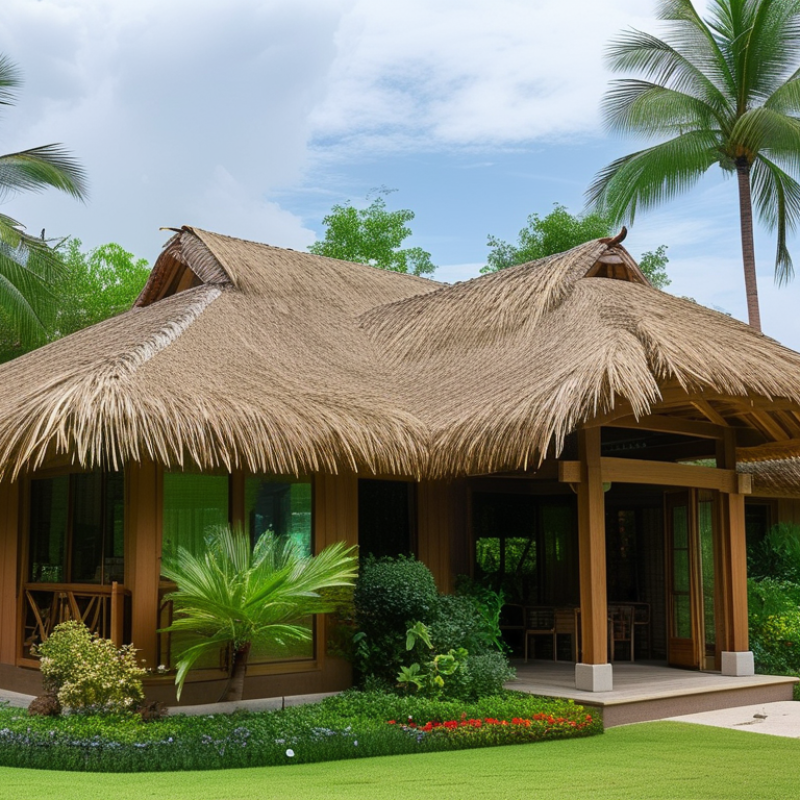
Choosing plastic synthetic thatch starts with the site, not the sample board. Record the local climate before comparing colors or textures. Hot, sunny regions demand strong ultraviolet resistance. Humid areas need reliable drainage and mold-resistant construction. Coastal locations add salt spray and powerful wind. Cold regions may bring freezing rain, ice, and heavy snow loads.
Location changes the installation requirements. A shaded garden roof may fade slowly, while an exposed pool shelter faces constant sunlight. Roof pitch, nearby trees, rain direction, and access for repairs also matter. I once underestimated falling branches on a landscaped structure. That mistake made maintenance far more difficult. Measure the roof carefully. Check the supporting frame, fixing points, and expected weight. Do not assume every synthetic thatch system suits every structure.
Define the appearance you need, but test performance first. Ask for UV data, wind resistance, water-shedding details, and available fire documentation. Local building professionals can explain regional requirements and suitable fixing methods. A sample should be viewed outdoors, during bright and cloudy conditions. Colors can appear surprisingly different. For busy hospitality areas, choose a surface that cleans easily and tolerates frequent inspection. For private gardens, a more natural texture may matter more than maximum durability. Keep a small spare section for future repairs. It may feel unnecessary, but matching older material can be difficult.
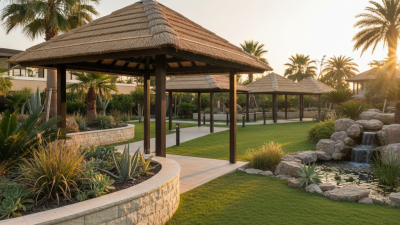
Climate conditions strongly influence synthetic thatch requirements. Compare representative long-term climate normals to identify whether your project needs greater resistance to moisture, ultraviolet exposure, or heat.
Higher rainfall calls for reliable drainage, waterproof backing, mold resistance, and secure fastening. High sunshine levels increase the importance of UV-stabilized materials, color retention, and heat-resistant construction. Values are rounded climate-normal references; verify site-specific wind, fire, and building-code requirements before specifying the roof system.
Choosing plastic synthetic thatch starts with comparing materials. High-density polyethylene offers stable color and resists moisture, insects, and many cleaning chemicals. Polypropylene feels lighter and may suit sheltered structures. Check UV stabilizers, not only the plastic type. Ask for test data, fire performance details, and installation guidance. Coastal salt, strong wind, and heat can expose weak backing quickly. I have seen attractive panels lose shape when ventilation was ignored. That mistake is easy to repeat.
Tip 1: Compare samples outdoors. Bend each panel, inspect the underside, and check for brittle edges. A small sample cannot prove ten years of service, but it can reveal poor molding.
Design also affects durability. Dense, layered profiles usually hide seams better than thin, widely spaced strips. However, heavier designs need stronger battens and secure fixing points. Match the texture to the roof scale. Oversized fibers may look artificial on a small shelter. Review drainage paths, ridge details, and replacement access before installation. Realistic texture does not guarantee long life. Some surfaces collect dust and slowly change color.
Tip 2: Compare construction drawings, not photographs alone. Request wind-load assumptions and maintenance instructions. If answers remain vague, pause.
Lifespan claims need context. A roof under intense sunlight may age faster than one under seasonal shade. Look for UV testing, warranty conditions, and color-retention expectations. Ten years may describe structural service, not a fresh appearance. Clean with mild soap and soft water. Inspect fasteners and seams annually, especially after storms. I would record photos each spring. Maintenance estimates remain imperfect.
A practical comparison of common plastic synthetic thatch options and the main selection factors for outdoor roofing projects.
| No. | Selection Tip | Material or Design Factor | Typical Options | What to Check | General Performance | Best Use |
|---|---|---|---|---|---|---|
| 1 | Choose the right plastic | Polymer type | HDPE, polypropylene (PP), or PVC | Ask for the polymer specification, UV stabilizer information, and whether the material is virgin or recycled. | HDPE and PP are commonly selected for lightweight outdoor products; PVC can offer good weather resistance but may be heavier or less flexible depending on the formulation. | General outdoor roofs, garden structures, resorts, patios, and decorative applications. |
| 2 | Compare expected lifespan | Service life under outdoor exposure | Approximately 10–20 years for many quality products | Confirm the written warranty, UV testing method, climate assumptions, and maintenance requirements. | Actual life depends on sunlight intensity, temperature, wind, moisture, installation quality, and material formulation. A stated lifespan is not a guarantee for every environment. | Projects where replacement access is difficult or long-term appearance is important. |
| 3 | Prioritize UV resistance | Ultraviolet protection | UV stabilizers, UV absorbers, and color-stable pigments | Look for accelerated weathering test results and evidence that the color is integrated through the material rather than applied only as a surface coating. | Better UV protection helps reduce fading, embrittlement, cracking, and loss of flexibility. | Open-air roofs in sunny, tropical, high-altitude, or coastal regions. |
| 4 | Evaluate the thatch profile | Blade, reed, shingle, or layered-panel design | Single-strip blades, bundled reeds, molded tiles, and interlocking panels | Check how closely the design resembles natural thatch, how water is shed, and whether damaged sections can be replaced individually. | Layered and overlapping designs generally create a more convincing appearance and can improve drainage when installed correctly. | Decorative roofs, theme projects, hospitality areas, restaurants, and residential landscaping. |
| 5 | Check water-shedding performance | Roof pitch, overlap, and backing layer | Open thatch bundles, supported panels, or waterproof underlay systems | Confirm the minimum recommended roof pitch, overlap dimensions, fastener positions, and need for a waterproof membrane beneath the synthetic thatch. | Synthetic thatch is often a visible roof covering rather than a complete waterproofing system. Correct detailing is essential for leak prevention. | Rainy climates and roofs intended to protect furniture, walkways, or interior spaces. |
| 6 | Match weight to the structure | Product weight and support requirements | Lightweight strips, medium-weight bundles, or reinforced panels | Obtain the installed weight per square metre and compare it with the roof frame, purlins, fixings, and local structural requirements. | Plastic systems are often lighter than natural thatch, but clips, battens, underlays, and support frames add to the total dead load. | Existing buildings, pergolas, lightweight garden structures, and renovation projects. |
| 7 | Consider wind performance | Fastening system and edge detailing | Screws with washers, clips, battens, ties, and reinforced eaves | Review wind-load data, fixing spacing, ridge and hip details, perimeter restraints, and local building-code requirements. | Resistance is determined by the complete roof assembly, not only by the plastic material. Edges, corners, ridges, and penetrations usually need extra attention. | Exposed sites, coastal areas, elevated structures, and regions with strong seasonal winds. |
| 8 | Assess fire performance | Flammability and fire classification | Standard plastic products or products with flame-retardant additives | Request a valid fire-test report for the exact product and installation system; check local requirements for public, commercial, or high-occupancy buildings. | Plastic materials can melt, ignite, or produce smoke when exposed to sufficient heat. Flame-retardant treatment does not make a product non-combustible. | Commercial venues, hospitality projects, outdoor kitchens, public facilities, and buildings with strict safety requirements. |
| 9 | Compare maintenance needs | Cleaning, inspection, and replacement | Low-maintenance molded panels or replaceable modular strips | Check cleaning instructions, resistance to algae and mildew, access for inspection, availability of replacement pieces, and color-matching options. | Plastic thatch usually avoids the biological decay associated with natural thatch, but dirt, leaves, algae, fastener corrosion, and storm damage still require periodic attention. | Properties where regular re-thatching is costly or difficult. |
| 10 | Review environmental and end-of-life factors | Recycled content and recyclability | Virgin polymer, recycled polymer, or mixed-material construction | Ask about recycled content, material identification, take-back options, separation of metal and plastic parts, and local recycling availability. | Plastic roofing can reduce maintenance and material replacement, but disposal is more responsible when components can be separated and recycled. | Projects with sustainability targets, environmental reporting, or long expected service periods. |
Note: Lifespan and performance figures are general industry ranges, not product guarantees. Always verify certified test data, installation instructions, structural requirements, and fire regulations for the specific project location.
Choosing plastic synthetic thatch requires more than comparing color, texture, and price. Ask for an independent fire-test report. NFPA 701 evaluates flame propagation for certain materials, while ASTM E84 measures surface burning. These tests are not interchangeable. Confirm the complete roof assembly, including underlayment, gaps, fasteners, and ventilation. Check whether embers, dripping material, or concealed ignition were assessed. A neat sample can still hide weak details. I would not trust a brochure alone.
Weather resistance deserves equal attention. NOAA recorded 28 billion-dollar weather disasters in the United States during 2023. That figure shows why wind, hail, intense rain, and heat deserve practical testing. Request accelerated ultraviolet data using ASTM G154 or an equivalent method. Review color change, cracking, brittleness, and water absorption after exposure. Ask how the material performs after repeated wet-dry cycles. Laboratory aging is useful, but it cannot perfectly reproduce a coastal roof.
Structural performance depends on the installation, not only the plastic. Use ASCE 7-22 wind pressures for the project location, roof height, exposure, and geometry. Then verify uplift resistance for the actual clips, battens, substrate, and spacing. Thermal movement may loosen fasteners over time. Drainage paths must remain open beneath overlapping pieces. Look for documented pull-out or uplift testing, not just tensile strength data. Schedule inspections after severe storms and after the first hot season. Ten checks sound excessive, but replacing a failed roof is rarely simple.
Study the installation method before choosing plastic synthetic thatch. Ask how panels, tiles, or bundles attach to the roof structure. Check fastening points, overlap direction, edge finishing, and ventilation requirements. A sample installation is useful. Look closely at the underside. Weak fixing can cause movement during strong wind. One detail is easy to overlook: the roof frame must support the chosen system. If instructions seem vague, request written guidance from a qualified installer.
Compare maintenance needs realistically. Synthetic thatch may resist moisture, insects, and fading, but it is not maintenance-free. Inspect the roof after heavy rain or storms. Remove leaves from valleys, gutters, and roof edges. Check for loose fasteners, cracked components, or unusual gaps. Cleaning methods matter. Harsh chemicals or aggressive pressure washing may damage the surface. A simple inspection twice a year is practical, although busy owners may postpone it. That delay can become expensive.
Read the warranty line by line. Confirm the coverage period for color, material failure, fasteners, and weather-related damage. Ask whether professional installation is required for valid coverage. Check exclusions involving improper cleaning, structural movement, or unauthorized repairs. Keep invoices, installation records, and dated photographs. These documents can support a claim later. Verbal promises are not enough. Request the full warranty before payment, and make sure maintenance duties are clearly stated.
When comparing plastic synthetic thatch, calculate the installed cost, not the attractive carton price. Include panels, ridge pieces, fasteners, underlay, freight, customs, labor, access equipment, cleaning, and disposal. Ask for a five-year cost model with replacement assumptions. A cheaper product may require extra framing or skilled installation. I once compared only the tile price. That was a costly mistake.
Use local labor rates and current freight quotations, rather than supplier estimates alone. The U.S. Bureau of Labor Statistics Producer Price Index can help track changing construction input costs. The U.S. Environmental Protection Agency estimated 600 million tons of construction and demolition debris in 2018. This figure makes end-of-life planning financially important. Confirm whether damaged panels can be repaired, reused, or recycled locally. Disposal may become an overlooked expense.
Supplier reliability needs evidence. ISO’s 2023 Survey reported about 1.26 million ISO 9001 certificates worldwide, but certification does not guarantee suitable thatch quality. Request batch records, UV-aging results, fire-test documentation, installation details, and warranty exclusions. Check two completed projects personally, if possible. Compare color consistency and edge finishing under daylight. Ask about spare stock and maximum replacement lead times. Pay through staged milestones tied to inspection. A sample can look excellent, while a full shipment varies slightly. Require written acceptance criteria before ordering. Evaluate communication, documentation, and corrective-action speed. These details often reveal more than a polished sales presentation.