Leave Your Message
Please agree to this agreement

2026 Best Composite Roof Tiles for Global Buyers

Choosing the 2026 best Composite Roof Tiles requires more than comparing colors, prices, and showroom photographs. For global buyers, the right product must suit local weather, roof design, installation skills, and building requirements. A tile that performs well in Spain may respond differently under Canadian freeze-thaw cycles or tropical humidity. Details matter. Weight, impact resistance, water absorption, UV stability, fire classification, and expected service life deserve close review. Independent test reports are more useful than broad marketing claims. Still, data can be incomplete. Some suppliers publish laboratory results without explaining test methods, production dates, or regional limitations. That gap deserves attention.

This guide takes a practical buying perspective, combining material knowledge, installer considerations, and supplier verification. We examine how Composite Roof Tiles are made, tested, shipped, and installed across different markets. Product consistency matters when cartons arrive after long transport, with minor color variations or damaged edges. A reliable manufacturer should provide clear technical sheets, installation instructions, warranty terms, and responsive after-sales support. Local approval requirements should also be checked before ordering. A strong warranty cannot correct poor roof preparation or untrained installation. No ranking fits every roof. Buyers should compare wind ratings, fixing systems, maintenance needs, and total ownership costs rather than purchase price alone. Some recommendations may remain debatable, especially where regional testing differs. That is why this overview highlights both proven strengths and practical uncertainties. The best decision is informed, documented, and matched to the roof’s real environment.
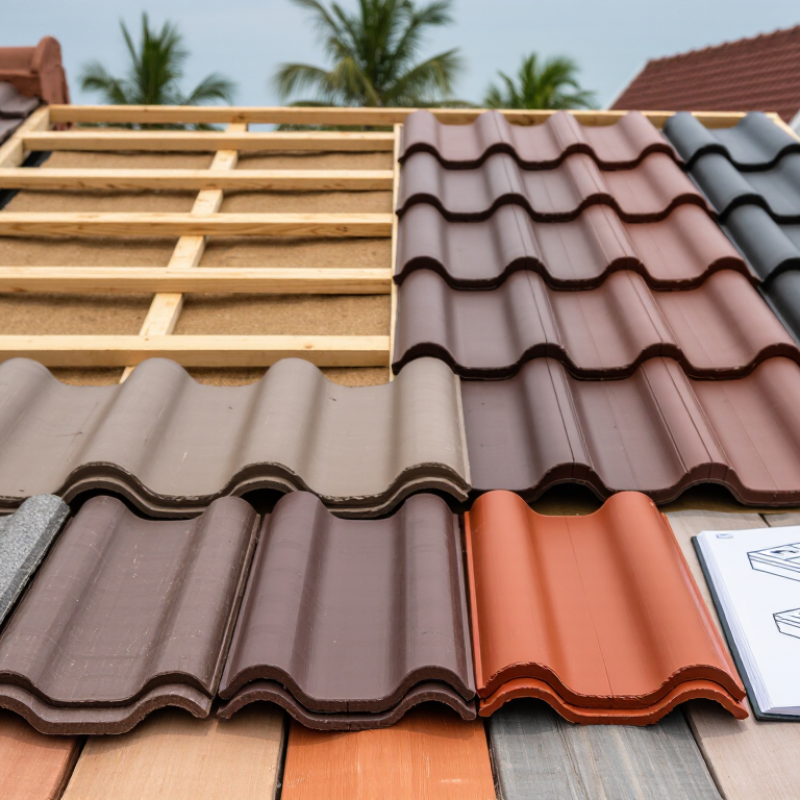
2026 Best Composite Roof Tiles for Global Buyers

Composite Tile Types: Polymer, Recycled, and Fiber-Reinforced Options

Polymer composite tiles offer consistent color, low water absorption, and lighter handling than many traditional roofing materials. Grand View Research valued the global composite roofing market at about USD 5.6 billion in 2023 and expects continued growth through 2030. That forecast supports wider adoption, but market growth does not guarantee equal product quality. Buyers should request documented freeze-thaw, wind-uplift, fire, and impact test results.

Recycled composite tiles can include reclaimed plastics, rubber, or mineral fillers. The U.S. Environmental Protection Agency reported 600 million tons of construction and demolition debris generated in 2018. Roofing products using recovered content may reduce landfill pressure, yet recycled feedstock can vary between batches. Ask for recycled-content percentages, material traceability, and end-of-life guidance. Labels alone are not enough.

Fiber-reinforced tiles combine polymers with glass, cellulose, or mineral fibers. These fibers can improve stiffness and dimensional stability under heat, cold, and heavy rain. ASTM testing and recognized laboratory reports provide stronger evidence than sales claims. In my experience, the best option depends on roof pitch, local weather, maintenance access, and installer skill. The trade-off is real. A lightweight tile may simplify installation but feel less authentic underfoot. A textured surface can resemble slate, yet collect dust in dry climates. Global buyers should compare tested performance, not appearance alone.
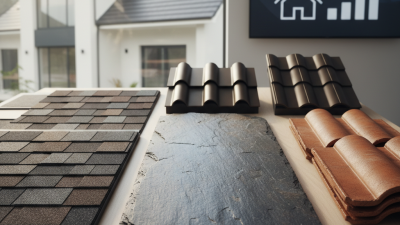

2026 Best Composite Roof Tiles for Global Buyers - Composite Tile Types: Polymer, Recycled, and Fiber-Reinforced Options
Evaluation Dimension Polymer Composite Tiles Recycled-Content Composite Tiles Fiber-Reinforced Cement Tiles Global Buyer Consideration
Typical Composition Polymer resin or polymer blend with mineral fillers, pigments, and stabilizers Recycled polymers, commonly post-consumer or post-industrial plastic, with mineral fillers or reinforcement Hydraulic cement, mineral aggregates, water, and reinforcing cellulose or synthetic fibers Request a technical datasheet confirming formulation, recycled content, and applicable standards
Typical Installed Weight Approximately 4–7 kg/m² Approximately 5–8 kg/m² Approximately 12–20 kg/m² Lightweight systems can reduce structural reinforcement and handling costs; verify local structural calculations
Typical Service-Life Range About 30–50 years when correctly specified and installed About 30–50 years; dependent on polymer quality, UV stabilizers, and recycled-material consistency About 30–50 years; dependent on climate, coating, maintenance, and installation quality Treat service-life figures as typical industry ranges rather than universal guarantees
Water Absorption Typically below 1% by mass Typically below 2% by mass, depending on fillers and surface design Typically higher, commonly around 8–20% by mass depending on product and test method Low absorption can support freeze–thaw durability, but product-specific test results are essential
Impact and Breakage Resistance Generally high impact resistance and low breakage during transport Generally good impact resistance; performance varies with recycled feedstock and reinforcement Rigid and durable, but more susceptible to cracking from severe impact or improper handling For hail, logistics, or remote projects, compare standardized impact-test results
UV and Color Stability Good when UV stabilizers and high-quality pigments are used Moderate to good; recycled polymers may require stronger UV stabilization Color-coated surfaces can fade or weather over time; uncoated surfaces develop a natural appearance Ask for accelerated-weathering data and color-retention requirements for high-solar regions
Fire Performance Varies widely; polymer content means fire classification must be verified Varies widely with polymer type, mineral loading, and fire-retardant formulation Generally strong fire performance; many cement-based products are classified as non-combustible under applicable standards Confirm the required Euroclass, ASTM, or local fire rating before specification
Thermal Conductivity Typically lower than cement-based tiles; exact performance depends on density and fillers Typically low to moderate; varies with recycled polymer and mineral content Typically higher than polymer-based composites, so roof insulation remains important Evaluate the complete roof assembly rather than tile material alone
Wind and Storm Performance Good potential because of low mass and interlocking profiles; fastening is critical Good potential when profile geometry and fastening meet wind-load requirements Good when correctly fixed, but higher weight increases handling and structural demands Require tested uplift resistance and installation details for the project wind zone
Minimum Roof Pitch Often approximately 15°–22°, depending on profile and weatherproofing design Often approximately 15°–22°, subject to the manufacturer’s tested overlap system Commonly approximately 15°–22°, but some profiles require steeper slopes Use the certified installation guide; pitch requirements are not interchangeable between profiles
Environmental Profile Long service life and low transport weight; end-of-life recycling depends on resin type and local facilities Can divert plastic waste from disposal and reduce demand for virgin polymer Mineral-based and durable, but cement production has significant embodied carbon Compare verified recycled content, environmental declarations, transport distance, and end-of-life options
Best-Fit Applications Lightweight residential roofs, renovations, coastal areas, and projects requiring easy handling Sustainability-led housing, public projects, renovation work, and buyers prioritizing recycled content Projects prioritizing mineral-based materials, fire performance, and conventional tile aesthetics Match the tile to climate, building code, roof structure, logistics, and installer capability
Key Purchasing Checks UV resistance, fire classification, wind uplift, thermal movement, and fastener compatibility Verified recycled percentage, batch consistency, UV stability, odor control, and fire classification Water absorption, freeze–thaw resistance, fiber type, coating durability, and handling requirements Request independent test reports, samples, installation manuals, warranty terms, and local code compliance
Note: Values are typical industry ranges for comparison only. Actual performance depends on formulation, profile, testing method, climate, roof design, installation quality, and applicable building regulations.

Durability Data: 30–50-Year Life, Class 4 Impact, and ASTM D3161 Wind Tests

2026 Best Composite Roof Tiles for Global Buyers

Composite roof tiles can offer a practical service life of 30–50 years when installed correctly. That number is not a promise. Sun exposure, salt air, freeze-thaw cycles, and poor ventilation can shorten performance. Buyers should request documented aging data, warranty conditions, and maintenance requirements before comparing prices.

Impact resistance deserves close attention in hail-prone regions. A Class 4 impact rating usually reflects testing with steel balls under a defined laboratory method. It does not guarantee zero damage in every storm. Ask for the complete test report, including tile thickness, temperature, and failure criteria. Small details matter. ASTM D3161 wind testing can help assess resistance under simulated wind conditions, where the method applies to the product. Check whether the report covers the exact tile profile and installation system.

Reliable evaluation also depends on the roof beneath the tiles. Deck condition, fastener spacing, flashing, and edge protection influence real-world results. Experienced installers should explain these points clearly, not hide them behind a long warranty. Independent laboratory documents are more useful than marketing claims. I would also inspect roofs after severe weather, because laboratory results cannot reproduce every gust or falling branch. A careful buyer leaves room for uncertainty. That is part of sound specification.

Composite roof tiles are commonly evaluated against three key durability benchmarks: an expected service life of approximately 30–50 years, Class 4 impact resistance, and wind performance tested under ASTM D3161. Service-life figures are indicative ranges and may vary with installation, climate, maintenance, and product construction.

Climate Fit: 50+ Freeze–Thaw Cycles and Salt-Spray Resistance

2026 Best Composite Roof Tiles for Global Buyers

Climate fit should guide every composite roof tile purchase. In alpine regions, trapped moisture expands during freezing. Repeated movement can loosen fasteners, open joints, and create hairline fractures. Specify products tested for at least 50 freeze–thaw cycles under a documented laboratory procedure. ASTM C666/C666M provides a recognized framework for repeated freezing and thawing, although it was developed mainly for concrete. That limitation matters.

Coastal exposure adds another burden. Salt deposits can attack metal fixings, flashings, and hidden connectors before visible staining appears. ISO 9227:2022 defines neutral salt-spray testing, but test hours do not directly equal outdoor service life. The World Meteorological Organization’s State of the Global Climate reports continuing ocean warming and rising sea levels, increasing concern for coastal construction. Choose corrosion-resistant fixings and demand complete test records. A tile alone is not the whole roof.

Tips: Ask for cycle count, test temperature, water absorption, impact results, and salt-spray duration. Check whether the report covers the finished assembly. Inspect sample edges after testing. Real projects are messier than laboratories. Fifty cycles may be insufficient in shaded, wet climates. Verify local wind, drainage, and installation requirements with a qualified professional.

Compliance Checks: UL 790, UL 2218, EN 13501-5, and CE Requirements

2026 Best Composite Roof Tiles for Global Buyers

Global buyers should treat compliance as a design filter, not a final paperwork task. Composite roof tiles can look convincing while failing the complete roof assembly test. Request current laboratory reports, product identification, test method, and scope before comparing prices. Details matter. UL 790 evaluates resistance to external fire exposure, including flame spread across the roof surface. It does not automatically prove performance in every roof configuration.

UL 2218 addresses impact resistance from simulated hail strikes. Ask which tile thickness, support system, and impact class were tested. A tile may pass alone, yet perform differently after installation. That gap deserves attention. For European projects, EN 13501-5 classifies external fire performance through the relevant roof test route. Check whether the declared class covers the intended pitch, substrate, underlay, and installation method.

CE marking requires more than a logo printed on packaging. Where construction product rules apply, review the Declaration of Performance and the required assessment procedures. The technical file should match the exact product supplied. Ask for traceable batch records and installation instructions. In project reviews, I have seen strong-looking reports fail because names or dimensions differed. That is an avoidable weakness. Independent review helps. Requirements still vary by destination. Confirm local building rules before shipment, especially for coastal weather, steep roofs, and fire-sensitive sites.

Global Buyer Scorecard: ≤7 kg/m² Weight, Warranty Years, Carbon, and Cost

For global buyers, the 2026 composite roof tile shortlist should begin with weight, not appearance. A target below 7 kg/m² can reduce roof-load demands and simplify handling on steep sites. Still, confirm the complete installed system, including battens, clips, and underlayment. A light tile does not automatically mean a lighter roof.

Warranty length deserves careful reading. A 30-year material warranty may exclude fading, storm damage, poor ventilation, or incorrect installation. Request laboratory test results, installation records, and the warranty claim process in writing. In my project reviews, clear documents often reveal more than attractive sales samples. Short sentences matter here. Read every exclusion.

Carbon performance should use a declared figure, preferably kilograms of CO2e per square metre across manufacturing, transport, and end-of-life stages. An environmental product declaration offers stronger evidence than a general “low-carbon” statement. Transport distance can change the result significantly. A tile produced nearby may outperform a lighter tile shipped across oceans. However, carbon databases are not always comparable, so buyers should check system boundaries.

Cost comparisons should include delivery, fasteners, labor, roof reinforcement, maintenance, and replacement risk. A cheaper tile may require more support or produce higher installation waste. Ask at least three qualified contractors for itemized quotes. Local climate testing is essential, especially for hail, wind, salt exposure, and freeze-thaw cycles. The scorecard is useful, but not perfect. Real roofs age differently.