7 Best Synthetic Roof Thatch Suppliers for Global Buyers?
Choosing the right Synthetic Roof Thatch supplier can shape a project’s appearance, safety, and long-term maintenance costs. Global buyers often compare more than price. They examine material quality, weather resistance, installation support, and delivery reliability. A resort roof near a saltwater coast faces different demands than a garden pavilion in a dry inland climate. Small details matter. Fiber thickness, fixing systems, color stability, and drainage design can influence performance over many seasons.
This guide reviews seven Synthetic Roof Thatch suppliers serving international customers. The comparison considers product construction, testing information, customization, warranty terms, and export experience. It also looks at practical buyer concerns, including sample requests, packaging, lead times, and replacement procedures. A credible supplier should explain how its thatch handles ultraviolet exposure, heavy rain, wind, and regular cleaning. Clear technical documents help. So do installation photographs from completed projects. Claims alone are not enough.
Still, no supplier is perfect. Product performance depends on roof pitch, local climate, installation quality, and ongoing inspection. Some published warranties may require specific fixing methods or maintenance schedules. Buyers should verify these conditions before placing an order. Prices can also change with shipping distance, exchange rates, and project volume. This shortlist is a useful starting point, not a final verdict. Ask difficult questions. Request physical samples. Compare evidence, not attractive brochures. A careful decision may take longer, but it can prevent faded panels, loose sections, and expensive rework later.
What Synthetic Roof Thatch Is and Why Global Buyers Choose It
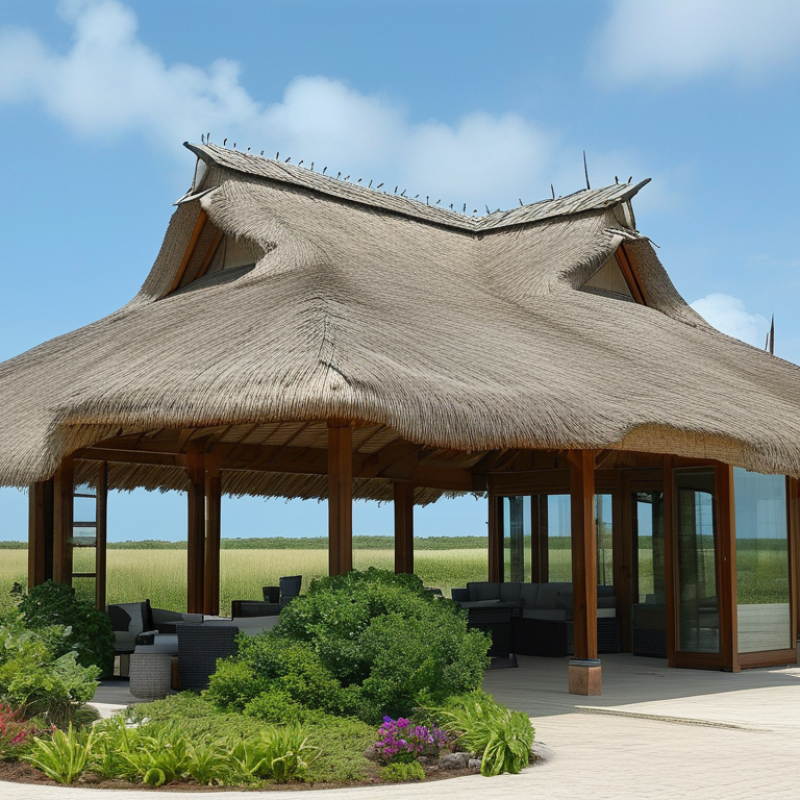
Synthetic roof thatch is a manufactured roofing finish designed to resemble natural thatch. It commonly uses UV-stabilized polymer fibers, molded panels, or tightly woven strips. These components create texture while reducing exposure to moisture, insects, and uneven harvesting quality. From a buyer’s perspective, consistency matters. Bundles or panels usually arrive with repeatable color, thickness, and dimensions. That simplifies planning for resorts, garden structures, restaurants, and residential projects.
Global buyers often choose synthetic thatch because it may need less frequent replacement than untreated natural material. A properly installed roof can retain its appearance through sun, rain, and humid coastal air. However, performance depends on the product, installation method, ventilation, and local climate. It is not maintenance-free. Dust still collects between textured layers, and strong winds can expose weak fixing points. Experienced installers check roof pitch, drainage, overlaps, and fastener spacing before covering the structure. They also review fire ratings, wind resistance, UV testing, and warranty conditions for the destination market.
Procurement teams should request samples, technical sheets, test reports, and installation guidance. A small sample can reveal color shifts that photographs hide. Comparing weight and panel flexibility also helps estimate labor and shipping costs. Some synthetic roofs look convincing from a distance but feel overly uniform up close. That trade-off deserves honest discussion. Buyers should assess appearance, lifespan, repairability, and compliance together, rather than selecting by price alone. In practice, no material performs perfectly. A trial installation may expose problems before a large order.
Key Standards for Evaluating Synthetic Thatch Suppliers
7 Best Synthetic Roof Thatch Suppliers for Global Buyers?
Key Standards for Evaluating Synthetic Thatch Suppliers
A reliable supplier must prove more than visual realism. The 2024 Grand View Research roofing materials report forecasts steady market growth through 2030, increasing pressure on suppliers to document performance. Ask for batch records, product specifications, and independent laboratory reports. Test samples should show consistent color, strand thickness, backing strength, and attachment points. Small differences matter on a large roof.
Fire performance is non-negotiable. Request testing against ASTM E108, NFPA 701, or EN 13501-1, depending on the project location. These standards measure different risks, so one certificate cannot cover every market. UV resistance also needs evidence. ISO 4892-3 accelerated weathering data can reveal fading and brittleness before installation. The result is not a perfect prediction.
Check wind uplift and water behavior under project-specific conditions. A supplier should provide test methods, not vague claims such as “storm-proof.” Review tensile strength using relevant ASTM methods, then compare results with the installer’s fixing design. ISO 14025 environmental declarations can support sustainability claims, but recycled content alone proves little. I would also inspect five production batches, not one showroom sample. That judgment can be wrong. Poor packaging, unclear replacement policies, and missing traceability often expose weak quality control. Reliable suppliers explain limitations openly.
Seven Leading Synthetic Roof Thatch Suppliers for International Buyers
Seven Leading Synthetic Roof Thatch Suppliers for International Buyers
International buyers should compare seven supplier profiles, not just product photographs. Reliable manufacturers provide UV-aging results, fire-performance documents, wind-load guidance, and batch traceability. They should also explain the backing structure, drainage design, and replacement process. Documents matter. Samples matter more.
The UNEP Global Status Report for Buildings and Construction found that buildings consumed about 30% of global energy in 2022. This supports closer attention to roof ventilation, insulation, and indoor heat gain. Suppliers offering ventilated panels or reflective backing deserve stronger consideration. However, “cool roof” claims need measured data, not attractive wording.
A small sample under direct sunlight can reveal fading, odor, loose fibers, or excessive heat.
UNCTAD reports that maritime transport carries over 80% of world merchandise trade by volume. Therefore, export experience affects real project costs. Leading suppliers should provide seaworthy packaging, moisture barriers, container-loading plans, and clear replacement policies. Buyers should request installation drawings, test certificates, production lead times, and references from similar climates. Consider suppliers with stable color batches, stainless fixing systems, and documented quality checks. A low quotation may hide expensive crating, customs delays, or unsuitable fasteners.
Fit samples first. Not always. Some suppliers advertise natural appearance while sacrificing drainage or fire documentation. That trade-off deserves careful review before any deposit.
Comparing Materials, Designs, Durability, and Installation Support
Synthetic thatch suppliers differ sharply in material quality. Polyethylene and polypropylene strands resist moisture, while UV-stabilized polymers retain color longer. Grand View Research reported continued growth in synthetic roofing demand, driven by weather resistance and lower maintenance needs. However, market growth does not guarantee equal performance.
Look for documented testing under ASTM E108 or UL 790 fire-exposure procedures. Ask for accelerated ultraviolet testing, such as ASTM G154, and water-absorption data. A serious supplier should state test duration, specimen thickness, and installation conditions. Vague “20-year life” claims need caution. Coastal salt, intense sunlight, and poor drainage can shorten that estimate.
Design affects both appearance and installation speed. Dense layered panels create deeper shadows, but they may require stronger battens and more fasteners. Loose bundles look natural, yet wind can expose gaps. Installation support should include roof drawings, fixing schedules, ridge details, flashing guidance, and trained technical contacts. The International Building Code requires roof assemblies to meet local fire and structural provisions, so suppliers should provide compliance documents for each destination. In practice, clear drawings often prevent more defects than attractive samples. I would still request a small sample roof section before approving a large shipment.
7 Best Synthetic Roof Thatch Suppliers for Global Buyers?
Comparing common synthetic thatch materials, design formats, durability, and installation support
This supplier-neutral benchmark compares seven widely used synthetic thatch configurations rather than company or brand claims. The service-life figures represent practical planning estimates based on common UV-stabilized polymer specifications; actual performance depends on climate, roof pitch, ventilation, fixing method, fire requirements, and maintenance. For international projects, buyers should also request installation drawings, wind-load guidance, fire-test documentation, replacement-thatch availability, and technical support in the destination market.
How to Select the Right Supplier for Your Project and Market
Choosing among seven synthetic roof thatch suppliers requires more than comparing catalogue photos. I start with climate, roof pitch, fire requirements, and installer experience. A coastal resort needs corrosion-resistant fixings, UV-stable polymer strands, and documented wind testing. FM Global property-loss guidance shows that wind uplift remains a major roof risk, so request tested fixing layouts, not vague “storm-proof” claims. Ask each supplier for product samples, installation drawings, batch traceability, and warranty exclusions.
Materials should also match the market’s compliance expectations. ASTM E108 and UL 790 classify roof assemblies for external fire exposure, but a material certificate alone may not represent the complete roof system. Request the exact assembly tested, including underlay, battens, fixings, and pitch. For durability, ISO 4892-3 supports accelerated weathering evaluation, although laboratory exposure never perfectly copies tropical salt, dust, or monsoon rain. That is where supplier judgment matters.
Check the supplier’s production history and quality controls. The 2023 UNEP Global Status Report notes that buildings produced 34% of global energy-related emissions, encouraging more efficient and durable construction choices. A longer service life can reduce replacement waste, but only if claims are independently supported. Compare color-fade data, recycled content evidence, drainage details, and spare-tile availability. Visit a completed project if possible. Small details reveal weaknesses. I would also test a roof mock-up after heavy rain, because brochures rarely show noisy, trapped water or difficult repairs. Perfect selection is unlikely; documented compromises are safer.