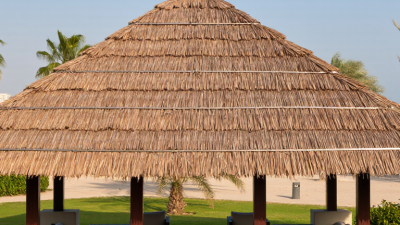
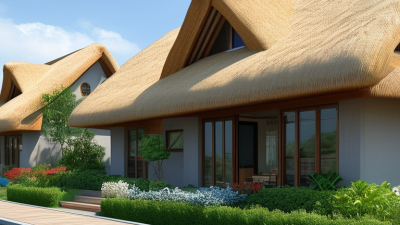
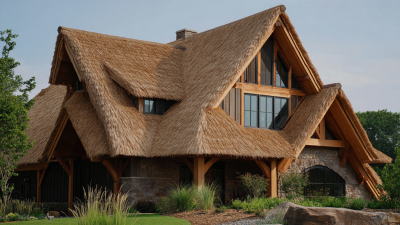
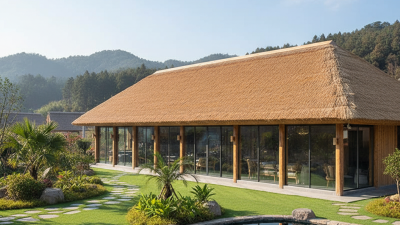
Choosing the best Plastic Synthetic Thatch means looking beyond its tropical appearance. A sample may resemble dried palm leaves in a showroom, yet perform differently under intense sun, driving rain, or coastal wind. Compare UV resistance, water shedding, fixing methods, fire-test documentation, expected service life, and warranty terms. Ask for product-specific test results, not broad claims about “all-weather” performance. Small details matter: a secure edge, consistent color, and clear installation guidance can affect the finished roof.
Plastic’s wider environmental footprint also deserves attention. The OECD’s Global Plastics Outlook (2022) estimated that global plastics production reached 460 million tonnes in 2019, while only 9% of plastic waste was recycled. Those figures describe plastics overall, not synthetic thatch specifically. Still, they make recycled content, durability, and end-of-life options reasonable questions for suppliers. A longer-lasting roof may reduce replacement frequency, but that benefit should not be assumed without reliable product data. Ask whether the manufacturer identifies the polymer, documents recycled content, and explains how damaged panels can be handled.
Details matter. Not just appearance. The best choice depends on your climate, roof structure, maintenance capacity, and project priorities. Compare samples outdoors, check the underside and attachment points, and request written specifications before buying. Some information may remain unclear, even after careful research. That is a reason to pause and verify, not to rely on attractive photographs alone.
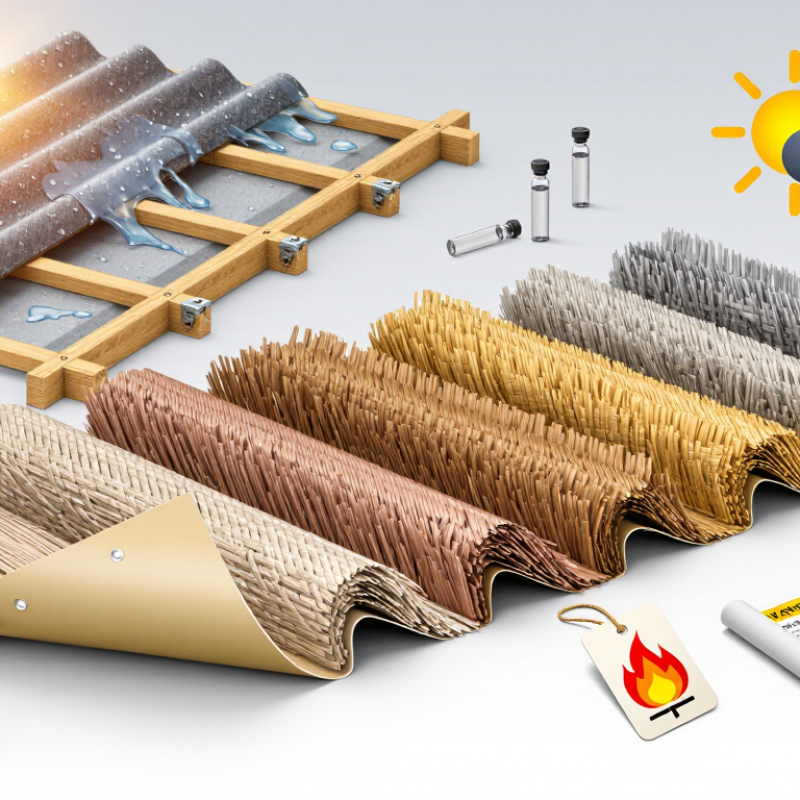
Start with the building’s purpose and setting, not just the roof’s appearance. A garden shelter may need a relaxed, natural look, while a café roof may need a denser finish that hides the backing. Note the roof area, slope, edges, and any valleys where water could collect. Small details matter.
Then assess local exposure. Strong wind, driving rain, salt air, and intense sun can affect material choice and fastening requirements. Check the roof structure and underlayment before ordering; synthetic thatch adds weight, and the supporting frame must be suitable. Ask the supplier for product specifications, installation guidance, and any relevant fire-performance information. Follow local building requirements.
Installation conditions can change the best choice. A steep roof may need different attachment methods from a shallow canopy, and a complex roof takes more cutting and finishing time. Confirm access for workers, safe fixing points, and room for ventilation beneath the thatch. A sample panel helps compare color and texture in actual daylight. It may look different than expected. That is worth checking before covering the whole roof.
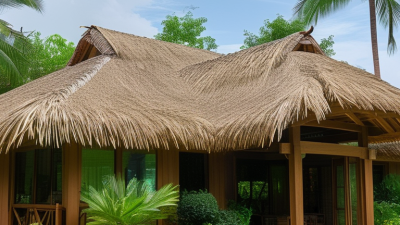
Choosing plastic synthetic thatch starts with the material, not the color. Polyethylene products are often flexible and lightweight, while PVC options can feel stiffer. Formulations vary, so compare UV-resistance data and ask how color may change after years of sun exposure. A sample viewed outdoors is more useful than a photo. Small differences show.
Profiles affect both appearance and water movement. Deep, irregular strands can create a fuller roofline and convincing shadows; flatter profiles may look neater but less textured from nearby. Check the underside, too. If bundles expose repeated seams or thin edges, those details may stand out at eaves and ridges. The most natural-looking option is not automatically the most durable.
Construction matters just as much. Ask how each bundle attaches to the roof deck, how edges are finished, and whether the assembly allows suitable drainage and ventilation. A well-made profile can still look poor if fasteners are visible or rows are uneven. Review installation instructions and relevant fire-performance documentation for the intended building. Don’t assume every plastic thatch system performs alike. I would compare a small installed section before ordering for a large roof; that extra step can reveal awkward overlaps you might miss on a sample board.
| Category | Option | Typical Characteristics | Advantages | Points to Check | Often Suitable For |
|---|---|---|---|---|---|
| Material | HDPE (high-density polyethylene) | A commonly used polyolefin for molded or formed synthetic thatch elements. Formulations and thicknesses vary by product. | Lightweight, moisture-resistant, and does not rot like natural plant material. | Ask whether UV stabilizers are included and request product-specific weathering and fire-test information. Performance varies by formulation and installation. | Outdoor roofs where low weight and resistance to moisture are priorities. |
| Material | PVC (polyvinyl chloride) | Used in some synthetic thatch products, commonly as formed strips, sheets, or modular elements. | Can be shaped into repeatable profiles and is generally resistant to water and biological decay. | Check the exact formulation, UV performance, temperature limits, and applicable fire-test results. Do not assume all PVC products have the same fire behavior. | Projects that need consistent molded or sheet-based components. |
| Material | Other polyolefin blends, including PP-based formulations | Some products use polypropylene or mixed polymer formulations; availability and composition differ among manufacturers. | Can provide a lightweight, moldable alternative depending on the product design. | Confirm the declared polymer, outdoor-use suitability, UV stabilization, and tested service conditions rather than relying on a generic material label. | Projects where a specific profile or product specification is more important than a particular resin family. |
| Profile | Individual strips or reeds | Separate thatch-like elements are attached in overlapping courses to a roof support or backing. | Flexible layout can create a layered, irregular appearance and allows individual sections to be replaced. | Installation takes more time; spacing, overlap, and fastening consistency affect coverage and weather shedding. | Roofs seeking a more varied, hand-laid appearance. |
| Profile | Panels or mats | Multiple thatch-like elements are assembled into a larger unit for attachment to battens or a supporting frame. | Can cover larger areas more quickly and help maintain a consistent layout. | Check panel dimensions, edge detailing, joint coverage, and how the product is secured against local wind conditions. | Larger roofs where installation speed and repeatable coverage are useful. |
| Profile | Tiles or shingles | Discrete overlapping units are installed in courses, resembling conventional roof coverings while retaining a thatch-style surface. | Modular layout can simplify localized replacement and create defined courses. | Confirm the required roof pitch, overlap, underlayment, and approved fixing method for the specific product. | Projects that favor modular installation and clearly defined roof courses. |
| Construction | Open support frame with battens | Thatch components are fixed to battens or a subframe, with the layout determined by the product and roof design. | Allows air movement behind the covering when the roof assembly is designed for ventilation. | Structural support, drainage, wind uplift, and local building requirements must be considered. Open construction is not appropriate for every roof assembly. | Canopy-style or ventilated roof designs where the system is specifically detailed for this construction. |
| Construction | Solid roof deck with underlayment | The covering is installed over a continuous deck and specified underlayment, following the roof-system instructions. | Provides a continuous substrate and can support a more conventional roof assembly. | Deck, underlayment, ventilation, drainage, and fastening must be compatible with the covering and local code requirements. | Buildings requiring a continuous roof substrate or a more enclosed roof assembly. |
| Construction | Mechanical fastening and overlap | Components are secured with specified screws, clips, or other approved fixings, usually in overlapping courses. | Correct fixing and overlap help keep elements in place and manage rainwater flow. | Use the specified fastener type, spacing, edge details, and installation pattern; improvised fastening can compromise performance. | All profiles, provided the fixing method matches the product and roof design. |
| Selection check | UV, fire, wind, and warranty documentation | These are performance attributes of the specific product and, in some cases, the complete roof assembly—not guaranteed by the polymer name alone. | Product documents help compare options against site exposure and regulatory needs. | Request relevant test reports, installation instructions, warranty terms, and confirmation of applicable local approvals. Fire performance can depend on the full assembly. | Every project, especially buildings subject to fire, wind, or planning requirements. |
Comparison note: Synthetic-thatch performance varies with resin formulation, UV additives, thickness, profile, fasteners, roof assembly, and exposure. Confirm specifications and local code requirements for the exact product before purchase or installation.
Plastic synthetic thatch should suit the weather it will actually face. Check whether the material has documented resistance to UV exposure, heavy rain, wind, and temperature swings. Coastal air and repeated freeze-thaw cycles can reveal weaknesses that a showroom sample will not. Ask for test information, not just claims such as “all-weather.” Small details matter.
Fire safety needs equal attention. Look for clear test reports covering the complete thatch product, rather than relying on a statement about the plastic resin alone. Confirm that the tested assembly matches your intended installation, including any backing or underlayer. Requirements vary by location and building use, so verify what applies before buying. Ask for evidence. A flame-resistant claim is not a guarantee that a roof cannot burn.
Durability also depends on installation and upkeep. Inspect sample edges for brittleness, uneven color, or loose fibers, then ask how the product performs after prolonged sun exposure. Check the warranty for exclusions involving fading, wind damage, or installation errors. A glossy sample can look convincing, but it tells little about years outdoors; I would not judge by appearance alone.
Tips: Compare test reports side by side, request a larger sample, and ask how often inspection is recommended. Keep a note of the exact product specification you reviewed.
Assess weather resistance, fire safety, and durability using product-specific test reports—not appearance alone.
ASTM E84 flame-spread index (FSI) class limits. Lower FSI limits indicate less flame spread in this test; this chart does not rate any specific thatch product.
Ask for results after relevant UV and moisture exposure. ASTM G154 describes accelerated UV and condensation exposure, but does not set one universal pass/fail duration for all products.
Request the actual test report and applicable local-code approval. ASTM E84 class limits are Class A: FSI 0–25, Class B: 26–75, and Class C: 76–200. The test result alone does not establish suitability for every building.
Check evidence for color and material retention, resistance to cracking or brittleness, and performance of the thatch and its fasteners under the intended installation conditions.
Judge the roof from the ground and up close. Look closely. Do the strands vary in shade, or does the surface look flat under bright sun? Ask for a full-size sample, since a small swatch can hide repeating patterns and exposed cut edges. Check how it looks when wet, too. Plastic thatch varies in material and UV protection, so request product-specific information rather than assuming every roof ages alike.
Maintenance depends on exposure and installation. Salt air, dust, and overhanging trees can leave visible residue; ask what cleaning methods the supplier recommends. Inspect seams, fasteners, and brittle or faded strands after storms. A roof that is easy to rinse may still need skilled repairs. I would not treat a long warranty as proof of low maintenance; read what it excludes.
Environmental impact deserves equal attention. The OECD’s Global Plastics Outlook reports that 353 million tonnes of plastic waste were generated worldwide in 2019, and only 9% was ultimately recycled. UNEP’s 2023 report, Turning off the Tap, says system-wide changes could reduce plastic pollution by 80% by 2040. Neither figure measures synthetic thatch specifically. Ask what polymer it contains, whether it includes recycled material, and how damaged sections can be separated or recycled locally. Disposal options may be limited; that detail is easy to overlook.
How to Choose the Best Plastic Synthetic Thatch?
Compare warranties by checking what they actually cover: fading, cracking, weather damage, and replacement labor. A long product warranty may exclude installation faults or require approved underlayment. Ask for exclusions in writing, plus proof of the installer’s separate workmanship coverage. Details matter. Also confirm whether coverage transfers to a future owner.
Compare written, itemized installation quotes, not just the price per square foot. Look for underlayment, battens, ridge and edge finishing, access equipment, waste removal, and any roof-deck repairs.
For context, the Journal of Light Construction’s 2024 Cost vs. Value Report put a U.S. asphalt-shingle roof replacement at $30,680, with $18,439 in reported resale value. That is not a synthetic-thatch estimate; it shows why upfront cost and resale value should be judged separately.
Long-term value depends on maintenance, climate exposure, repair access, and the product’s documented service-life testing. I would not assume every warranty equals real-world durability.
Tips: Request the same scope from each contractor. Ask who pays for labor if a covered panel fails. Check sample panels in direct sun, and inspect the roof after installation. Small gaps add up. Keep the quote, warranty, and maintenance instructions together.