Leave Your Message
Please agree to this agreement

China Best Theme Park Roof Tiles for Global Buyers

For global buyers, Theme Park Roof Tiles are more than decorative building materials. They influence visitor perception, weather resistance, maintenance costs, and long-term project value. A castle roof should look historic, while a water-park roof may need stronger protection against humidity, salt, and intense sunlight. Small details matter. Color consistency matters.

John Wardley, a respected British theme-park designer, often emphasized, “The story is the ride.” That principle also applies to roof design. Tiles should support the park’s story without creating avoidable structural or maintenance problems. A Chinese manufacturer may offer glazed ceramic tiles, concrete tiles, metal-effect systems, or lightweight composite options. Each choice requires careful comparison.

Experienced buyers should examine wind-uplift performance, freeze-thaw resistance, water absorption, fire classification, UV stability, and fixing systems. Product samples are useful, but a full mock-up is better. It reveals color variation, edge alignment, surface texture, and installation difficulty. Those practical findings can prevent expensive changes later.

The most attractive finish is not always the strongest option. A heavy tile may suit a historic façade, yet challenge the supporting structure. A glossy glaze can look impressive, but show dust and scratches more clearly. These limitations deserve honest discussion.

Reliable suppliers should provide technical datasheets, inspection records, packaging details, installation guidance, and consistent export support. Regional standards may differ, so buyers should confirm requirements with qualified local professionals. This guide explores how to evaluate China Theme Park Roof Tiles with a balance of design ambition, engineering judgment, and commercial realism. Mistakes remain possible. Careful verification reduces them.
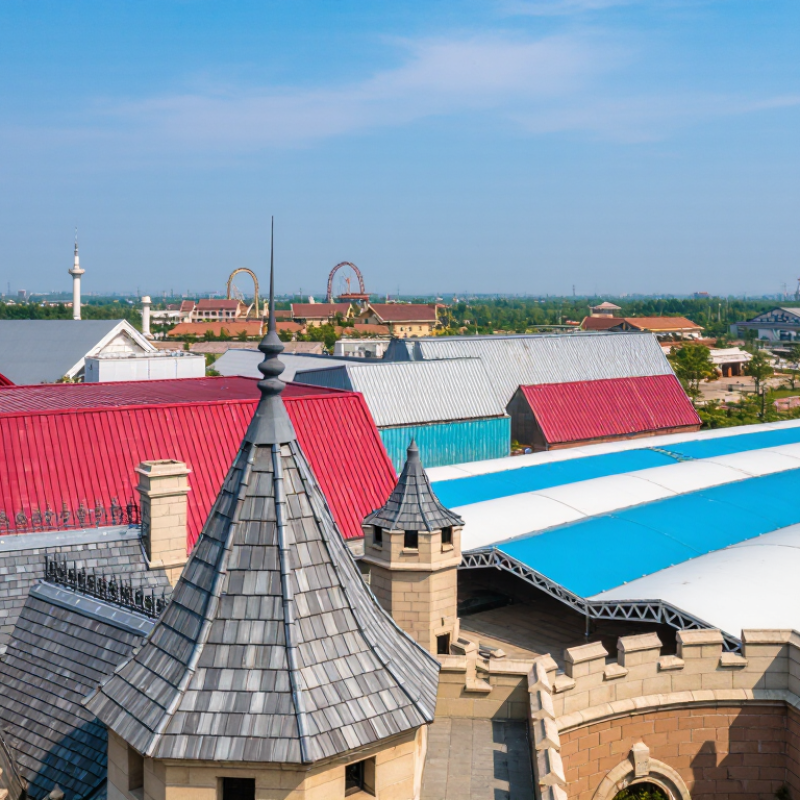
China Best Theme Park Roof Tiles for Global Buyers

Understanding Theme Park Roof Tile Requirements

Theme park roofs demand more than attractive color and traditional profiles. They must protect visitors, equipment, and busy interior spaces under changing weather conditions. The 2023 UNEP Global Status Report for Buildings and Construction states that buildings use about 34% of global energy and produce around 37% of energy-related emissions. Roof tiles with suitable solar reflectance, ventilation compatibility, and insulation support can reduce heat entering restaurants and queue areas. Small design choices matter.

Global buyers should define requirements by location. ASCE 7-22 supports site-specific wind-load calculations, while EN 1304 and ASTM C1167 provide useful references for clay and concrete roof tile performance. Ask for verified results on water absorption, freeze-thaw resistance, impact strength, fire behavior, and dimensional consistency. Coastal parks may need stronger fixing systems and corrosion-resistant accessories. Parks in cold regions need tested frost resistance. Heavy tiles can look secure, but roof structure capacity must be checked first.

Tips: Request independent laboratory reports, installation drawings, and sample tiles from different production batches. Check color variation in natural daylight. A bright sample can mislead. Project reviews often expose overlooked details, especially underlayment compatibility and maintenance access. I would not select tiles from appearance alone. A minor mismatch in clips or ridge ventilation may become an expensive repair during peak visitor season. Geological conditions, local codes, and storm history should guide the final specification, not only the supplier’s catalogue.
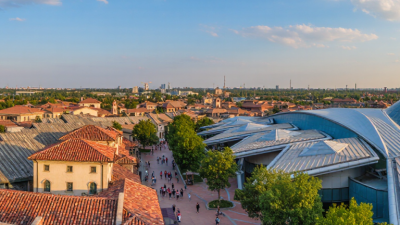
Types of Roof Tiles Made in China

China Best Theme Park Roof Tiles for Global Buyers

China produces several roof tile types for theme parks, cultural resorts, hotels, and public attractions. Clay tiles offer a warm, traditional appearance and suit Chinese, Mediterranean, or historic architectural themes. Their natural color can vary slightly between batches. That variation may add character, but it can also complicate large projects.

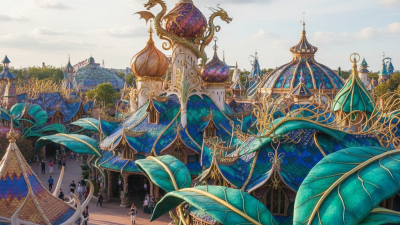
Glazed ceramic tiles provide stronger visual impact. Their smooth surfaces reflect sunlight and support bright colors, curved edges, and decorative ridges. They work well on pagodas, fantasy buildings, and entrance towers. Buyers should request color samples after firing, because digital images cannot show the final finish accurately.

Concrete tiles are heavier and often selected for their stable dimensions and practical cost. They can imitate clay, slate, or wood-grain textures.

Metal roof tiles are lighter and useful for large, complex roofs. Aluminum, galvanized steel, and stone-coated surfaces offer different balances of weight, durability, and appearance. Stone-coated tiles can create a textured, premium look, but the coating needs careful inspection around cut edges. Not every roof needs the most decorative option.

Experienced buyers check water absorption, load ratings, coating adhesion, dimensional tolerance, and packing methods. They also review local wind, rain, snow, and fire requirements before ordering. A beautiful tile can still fail when the supporting structure is underdesigned. Small sample testing is wise. Product selection is rarely perfect on the first attempt.

Key Quality Standards for Global Buyers

China Best Theme Park Roof Tiles for Global Buyers

Key Quality Standards for Global Buyers

Theme park roof tiles must do more than create a colorful skyline. They need stable dimensions, low water absorption, reliable strength, and consistent surface color. Ask suppliers for recent laboratory reports, not only product photos. Testing should match the destination market, such as EN 1304 for clay tiles or applicable ASTM requirements for concrete products.

Check resistance to freeze-thaw cycles, heavy rain, salt exposure, and strong wind. Coastal parks may need extra attention to moisture and corrosion around fixings. Fire performance also matters, especially near restaurants, theaters, and crowded indoor attractions.

Review installation details, including overlap, clips, battens, and drainage paths. Small gaps can become expensive leaks.

Ask for sample tiles from different production batches. Color differences may appear after firing. A tile can look excellent in a showroom but perform poorly after repeated wetting and drying. Looks can mislead. Request dimensional tolerances, breaking-load data, warranty terms, and traceable quality records. Independent inspection before shipment adds confidence, although it cannot replace correct installation.

Global buyers should also confirm packaging strength and replacement availability. Broken corners often result from poor pallet protection, not weak tile material. Some specifications are still overlooked, including roof access for maintenance and compatibility with local fixing systems. That deserves more attention. The strongest purchasing decision combines verified test data, experienced technical review, and a clear understanding of the park’s climate and roof design.

How to Evaluate Chinese Roof Tile Manufacturers

China’s theme-park roof tile suppliers should be judged by evidence, not catalog images. Grand View Research valued the global roofing materials market at over USD 150 billion in 2023, showing strong international demand. Yet decorative projects require tighter control than ordinary roofing. Ask for factory production records, kiln temperatures, batch numbers, and export references. A reliable manufacturer should provide test reports against EN 1304, ASTM C1167, or relevant national standards. Check whether the laboratory is independent and accredited.

Review physical samples carefully. Measure dimensions, color variation, edge straightness, and interlocking accuracy. Request water absorption, freeze-thaw, bending strength, and wind-resistance results. These figures matter on large roofs with repeated visual patterns. Visit the plant if possible. Observe raw material storage, mold maintenance, kiln loading, and final inspection. Photographs are useful, but they are not proof. I have seen attractive samples fail during transport because packaging was too weak.

Tips: Compare three suppliers using the same specification sheet. Require a pre-production sample and an approved color panel. Confirm pallet design, moisture protection, replacement rates, and delivery terms in writing. Use third-party inspection before shipment. Do not accept “zero defects” promises without a measurable inspection plan. A small compromise in shade consistency may become a major problem across a theme park roof. Allow time for testing; rushing procurement is an avoidable weakness.

Shipping, Installation, and Maintenance Considerations

China Best Theme Park Roof Tiles for Global Buyers

Shipping begins before production. The 2023 UNCTAD Review of Maritime Transport states that over 80% of global merchandise trade moves by sea. Roof tiles need stronger export packaging because vibration, humidity, and repeated handling can cause hidden cracks. Ask for moisture-resistant pallets, corner protection, lot labels, and loading photos. A practical container plan should leave inspection access and keep tile weight within the approved payload. Do not rely only on the supplier’s packing list.

Installation conditions vary by climate and roof design. Confirm local wind, rain, frost, fire, and structural requirements before ordering. ASTM C1167 provides performance requirements for clay roof tiles, while concrete tiles may follow different standards. Request test reports that match the actual product, not a similar sample. On site, installers should check roof slope, batten spacing, fixing points, and flashing around themed towers. Small gaps matter. A rushed installation can create leaks behind decorative surfaces, where repairs become expensive.

Maintenance should include visual checks after severe storms and seasonal cleaning of valleys, gutters, and drainage channels. Replace cracked tiles promptly, but keep spare pieces from the same production batch. Color and dimensions can change slightly between batches. That detail is easy to overlook. A maintenance log should record inspection dates, damaged locations, replacement quantities, and photographs. No checklist is perfect. Reviewing it after the first rainy season often reveals assumptions that the original plan missed.