How to Make Your Thatch Roof Fireproof: Essential Tips and Techniques
Creating a fireproof thatch roof is essential for homeowners seeking safety and longevity. The traditional beauty of thatch can be captivating, but it poses unique fire risks. According to Dr. Emily Hart, a leading expert in fire protection for thatch roofs, "Implementing innovative techniques is crucial for achieving a truly fireproof thatch roof."
Fireproofing a thatch roof involves careful selection of materials and application of fire-retardant treatments. Applying a fire-resistant coating is one effective method. However, many homeowners overlook the importance of regular maintenance. Neglecting small repairs can lead to potential fire hazards.
Additionally, understanding local regulations is vital. Many homeowners may unknowingly violate codes concerning fire safety. It’s essential to stay informed. While achieving a fireproof thatch roof may seem challenging, it is possible with diligence and the right guidance. Taking proactive steps can make a difference.
How Thatch Roofs Are Prone to Fire Hazards: Key Insights
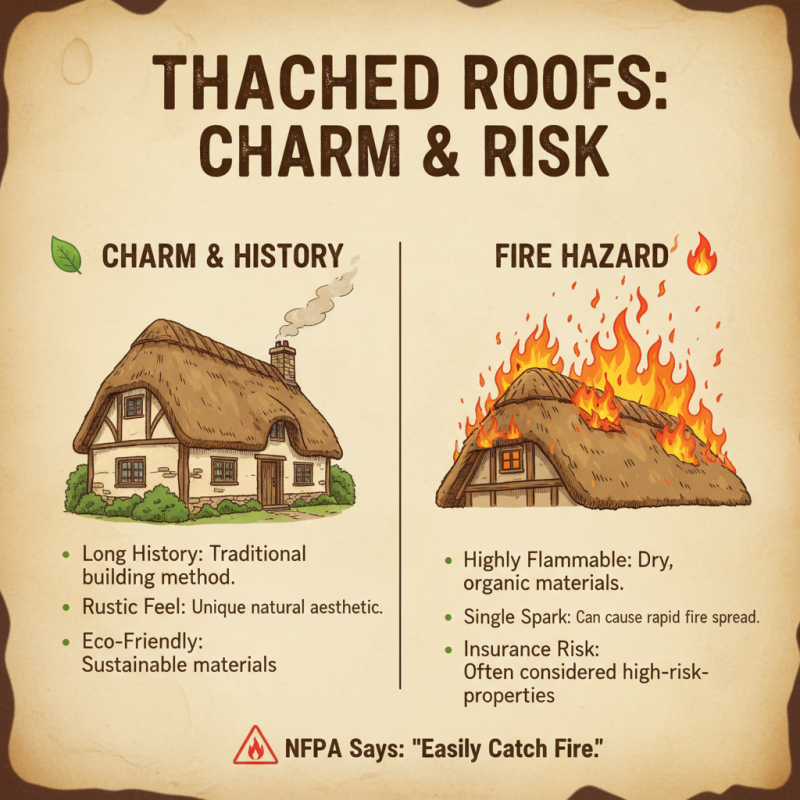
Thatch roofs have a long history. They provide charm and a rustic feel. However, they are also prone to fire hazards. According to the National Fire Protection Association (NFPA), thatched roofs can catch fire easily. The dry materials used in thatching are highly flammable. A single spark can lead to a major fire risk. Many insurance companies view thatched properties as high-risk.
To enhance fire safety, consider regular maintenance. Trim overhanging branches to keep debris away. Installing fire-retardant treatments on thatch can significantly reduce flammability. Studies found these treatments can lower fire risks by up to 70%. Ensure roofing is well-constructed. An improperly installed thatch can create gaps, allowing embers to get in.
Remember to keep a fire extinguisher nearby, just in case. Educate household members about fire safety. Having a fire alarm system is also crucial. Regularly check smoke detectors to ensure they work effectively. These simple tips can make a difference in enhancing safety at your home.
Understanding Fire Retardant Treatments for Thatch Materials
Thatch roofs offer a rustic charm, but they can be fire hazards. Fire retardant treatments help. These treatments can significantly improve the fire resistance of thatch. According to industry studies, using proper fire retardants can reduce fire spread by up to 70%.
Experts recommend regular application of fire retardant solutions to maintain protection. Many homeowners underestimate the importance of reapplication. Timing is crucial; some treatments last only six months. This is often overlooked. A detailed inspection of the thatch material can reveal areas needing extra attention.
Different regions have unique fire risks. Local climate and vegetation play a big role. For instance, areas with dry seasons may require more frequent treatments. Understanding these factors can guide homeowners in choosing the right techniques. Each application should be customized, based on environmental needs. Neglecting this could lead to unsafe conditions.
Essential Techniques for Installing a Fire-Resistant Thatch Roof
Installing a fire-resistant thatch roof requires careful consideration and the right techniques. According to a report by the National Fire Protection Association, thatched roofs can present fire risks if not properly treated. Using fire-retardant materials during installation is crucial. These materials can significantly reduce flammability, making your roof more resilient against fire hazards.
When building, ensure that the thatch is tightly compressed. Loose thatch can easily ignite and spread flames. Adding an underlayer of non-combustible material can also enhance safety. Regular maintenance is essential. Cleaning debris and moss from the roof helps prevent unwanted fires. Routine inspections allow homeowners to catch potential issues early.
It’s important to recognize that even with precautions, risks remain. Not all fire-retardant treatments offer the same level of protection. Some may need frequent reapplication to maintain effectiveness. Homeowners should research and be aware of local regulations on thatch roofing. This knowledge can help avoid mishaps and enhance overall safety.
Effective Maintenance Practices to Enhance Thatch Roof Fire Safety
Thatch roofs are charming but can pose fire risks. Proper maintenance is essential for enhancing fire safety. According to a report by the National Fire Protection Association, thatch roofs can ignite easily due to their organic materials. Regular inspections are key. Look for signs of deterioration or dead vegetation. These can create opportunities for embers to catch fire.
Water treatment methods can also be effective. Some studies show that applying specially formulated fire retardants can reduce the flammability of thatch by up to 80%. These treatments must be reapplied periodically for effectiveness. Homeowners often overlook this aspect, thinking one application is enough. Remember, a little maintenance goes a long way in fire prevention.
Additionally, keeping the surrounding area clean is critical. Remove leaves, branches, and debris. This reduces fuel sources that can lead to fires. Engage with local fire departments for advice on recommended practices. Too many homeowners rely solely on aesthetics, ignoring safety. Without a proper maintenance routine, your beautiful thatch roof may become a fire hazard.
Case Studies: Successful Fireproofing of Thatch Roofs in Different Climates
Fireproofing thatch roofs is crucial, particularly in regions prone to wildfires. One successful case comes from a community in South Africa. They applied a special fire-retardant treatment to their roofs. This treatment significantly reduced flammability, providing extra safety. However, maintenance can be a challenge. Regular inspections are necessary to ensure the treatment remains effective. It’s not a one-time fix.
In another case, a family in the UK incorporated non-combustible materials in their roofing structure. They combined thatch with metal sheeting underneath. This innovative approach has worked well, but they faced issues with heat retention. The insulation properties of thatch can be compromised. Finding the right balance is essential for safety and comfort.
These examples show that fireproofing is not a straightforward task. Each environment presents unique challenges. Implementing multiple strategies often yields the best results. Continuous evaluation and adaptation are key to long-term effectiveness. Fire safety is an ongoing journey, not a destination.
How to Make Your Thatch Roof Fireproof: Essential Tips and Techniques - Case Studies: Successful Fireproofing of Thatch Roofs in Different Climates
| Region |
Fireproofing Technique |
Effectiveness Rating (1-10) |
Comments |
| Tropical Region |
Chemical Fire Retardants |
9 |
Highly effective in high humidity. |
| Temperate Region |
Reflective Roof Coating |
8 |
Reduces heat absorption significantly. |
| Dry Climate |
Sandbags and Firebreaks |
7 |
Effective for ground-level fires. |
| Coastal Areas |
Natural Fiber Fire Retardants |
8 |
Sustainable and effective against salty air. |
| Mountain Areas |
Metal Sheeting Cap |
10 |
Excellent protection against embers. |