The Ultimate Guide to Synthetic Thatch Roofing Benefits and Installation Tips
In the realm of roofing solutions, "Synthetic Thatch Roofing" has emerged as a remarkable alternative that marries aesthetic appeal with functional durability. According to industry expert Dr. Emily Thompson, a recognized authority in architectural roofing, "Synthetic Thatch Roofing allows homeowners to achieve the timeless beauty of thatch while benefiting from modern advancements in materials science." This statement underscores the growing acceptance of synthetic thatch as not only an aesthetically pleasing option but also a practical choice for those looking to enhance their property's value.
As we delve into the ultimate guide to the benefits and installation tips for Synthetic Thatch Roofing, it becomes clear that this innovative roofing option offers a wide array of advantages. From its impressive longevity to reduced maintenance requirements, synthetic thatch not only enhances curb appeal but also provides sustainable benefits. Whether you're embarking on a new construction project or considering a roofing upgrade, understanding the intricacies of synthetic thatch can help you make informed decisions that will stand the test of time.

Understanding Synthetic Thatch Roofing: An Overview
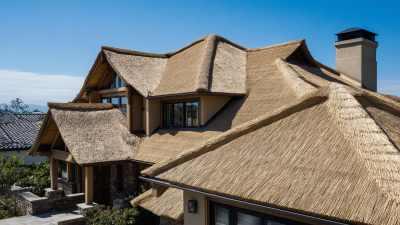
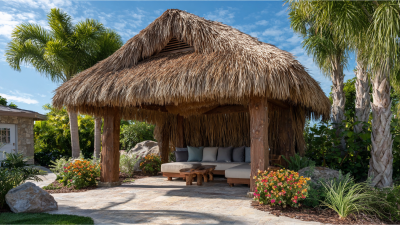
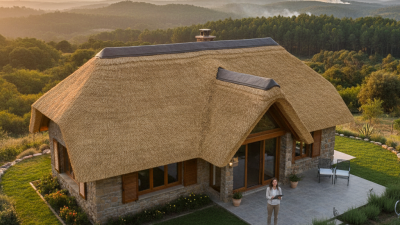
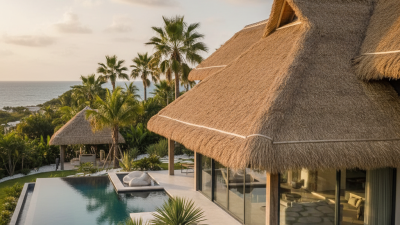
Synthetic thatch roofing has become a popular choice for homeowners looking for a blend of aesthetics and durability. Unlike traditional thatch, which can be susceptible to pests and severe weather conditions, synthetic options are designed to mimic the natural look while providing enhanced resilience. These roofs are typically made from high-quality materials such as polyethylene or other synthetic polymers that are resistant to fading, warping, and combustion. Their lightweight nature also reduces the structural load on buildings, making installation easier and often less costly.
Moreover, synthetic thatch roofing offers significant energy efficiency benefits. These roofs are engineered to reflect heat, keeping homes cooler during hot weather and reducing the need for air conditioning. This can lead to energy savings over time, contributing to a more sustainable living environment. Additionally, many synthetic thatch products are designed to require minimal maintenance compared to traditional materials, allowing homeowners to enjoy the aesthetic appeal without the frequent repairs associated with natural thatch. As a result, synthetic thatch roofing presents an attractive option for those looking to enhance their property while embracing practicality and longevity.
The Ultimate Guide to Synthetic Thatch Roofing Benefits and Installation Tips
| Feature |
Description |
| Durability |
Synthetic thatch roofing is designed to withstand harsh weather conditions, including high winds, rain, and UV exposure. |
| Maintenance-Free |
Unlike natural thatch, synthetic options require minimal maintenance and won’t attract pests. |
| Installation |
Synthetic thatch can often be installed more quickly than natural materials, saving time and labor costs. |
| Aesthetic Appeal |
Provides a traditional thatched look with the benefits of modern materials, enhancing property value. |
| Fire Resistance |
Many synthetic thatch materials are treated for fire resistance, making them a safer option. |
| Weight |
Typically lighter than traditional thatch, reducing the load on the roofing structure. |
Key Benefits of Choosing Synthetic Thatch Roofing for Your Home
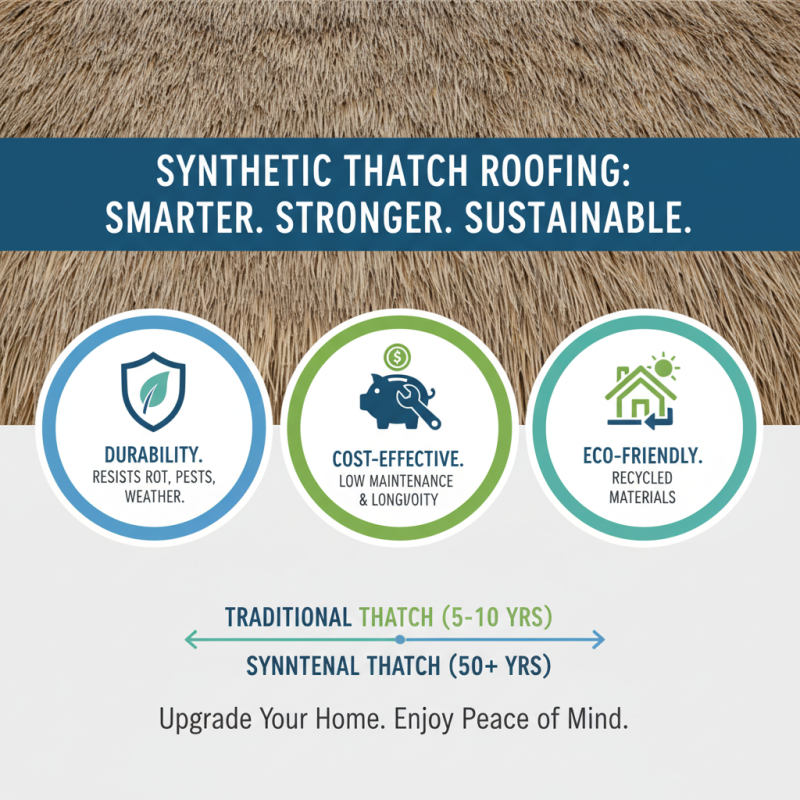
Synthetic thatch roofing is increasingly becoming the preferred choice for homeowners looking to combine aesthetics with functionality. One of the primary benefits of synthetic thatch is its impressive durability. Unlike traditional thatch, which can be susceptible to rot, pests, and weathering, synthetic materials are designed to withstand harsh environmental conditions. This longevity not only enhances the roof's lifespan but also reduces the need for frequent repairs and replacements, leading to lower long-term maintenance costs.
Another significant advantage is the eco-friendliness of synthetic thatch roofing. Many products are made from recycled materials, making them a sustainable alternative that minimizes environmental impact. Additionally, these roofs often come with energy-efficient properties, reflecting heat and helping to regulate temperatures in the home. This can result in reduced energy bills, making synthetic thatch a smart financial decision for homeowners who are conscious of both their budgets and their carbon footprints. As more people seek environmentally responsible building solutions, synthetic thatch roofing stands out as a compelling option.
Essential Factors to Consider Before Installation
Before installing synthetic thatch roofing, there are several essential factors to consider to ensure a successful and efficient project. First and foremost, evaluating the roofing structure is crucial. A thorough inspection will help identify if the existing framework can support the weight and specific requirements of synthetic materials. It's important to make necessary adjustments or reinforcements before proceeding with installation to avoid structural issues down the line.
Another vital aspect is the local climate and environmental conditions. Synthetic thatch roofing can be a fantastic option in various climates due to its durability and resistance to pests, but understanding how local weather patterns may affect the installation and longevity of the roof is key. Additionally, ensuring proper ventilation and drainage during the installation process is essential to maintain the integrity of the roofing system, preventing moisture buildup and potential damage in the long term.
Lastly, consider the aesthetic preferences and functionality desired for the property. Synthetic thatch roofs come in various styles and colors that can enhance the overall look of a home or building. It’s beneficial to select a design that complements the architecture while also providing practical advantages like energy efficiency and sound insulation. By taking these factors into account, homeowners can optimize their synthetic thatch roofing installation and enjoy its benefits for years to come.
Step-by-Step Guide to Installing Synthetic Thatch Roofing
Installing synthetic thatch roofing can seem daunting, but with the right approach, you can achieve professional results. First, it's essential to prepare your roofing structure to ensure it can support the weight and specific installation requirements of synthetic materials. According to the National Roofing Contractors Association, synthetic thatch can weigh significantly less than traditional thatch, reducing the risk of structural issues over time. A sturdy underlayment is crucial, as it provides a waterproof barrier and adds durability to your roofing system.
Next, proper installation involves laying the synthetic tiles in a staggered pattern, mimicking the natural look of thatch. This step not only enhances aesthetics but also ensures maximum water runoff, which is vital for longevity. Reports indicate that buildings with synthetic thatch roofing can experience a reduction in energy costs by up to 20% due to improved insulation properties compared to traditional materials. Additionally, securing tiles with the recommended adhesives and fasteners will help withstand harsh weather conditions, further extending the lifespan of your roofing. Always keep industry standards and techniques in mind as you proceed with each phase of the installation.
The Benefits of Synthetic Thatch Roofing
Maintenance Tips for Longevity of Synthetic Thatch Roofs
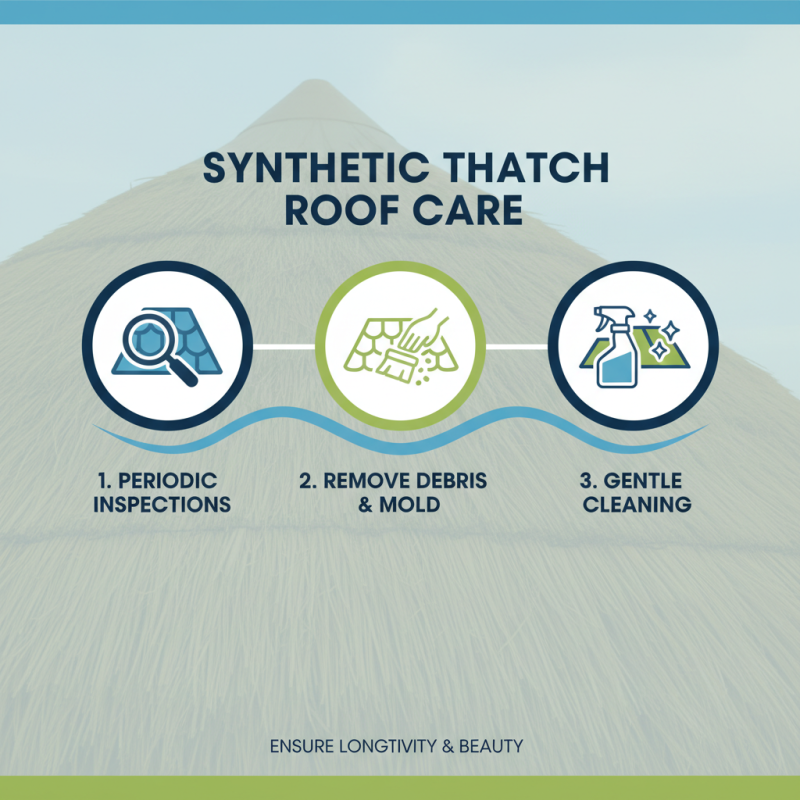
To ensure the longevity of synthetic thatch roofs, regular maintenance is crucial. One of the primary steps is to conduct periodic inspections to check for any signs of wear or damage. Look for loose tiles or areas where debris may have accumulated, as organic matter can promote mold growth and damage the structure over time. Cleaning the roof regularly with a gentle water spray can help eliminate dirt and prevent the buildup of moss or algae, ensuring that the roof remains not only attractive but also functional.
Another essential aspect of maintenance is addressing any potential drainage issues. Ensure that gutter systems are clear and adequately directing water away from the roof surface. Poor drainage can lead to water pooling, which may compromise the integrity of the synthetic materials and lead to premature aging. Additionally, consider reapplying protective coatings if recommended by the manufacturer, as these can enhance the roof’s resistance to UV rays and other environmental factors, ultimately prolonging its lifespan and maintaining its aesthetic appeal.