Leave Your Message
Please agree to this agreement

How to Choose the Best Synthetic Thatch Supplier?

Choosing the best Synthetic Thatch supplier requires more than comparing prices on a spreadsheet. A roof may look tropical in photographs, yet perform poorly under strong sun, salt air, or heavy rain. The supplier’s material records, installation guidance, and project history deserve close attention. Experienced buyers examine samples in daylight. They also ask how the product changes after years outdoors. Small details matter. A brittle edge can complicate installation. Faded panels can damage an otherwise attractive resort entrance.

A dependable supplier should explain fiber composition, fire performance, UV stabilization, water resistance, and expected service life. Request test reports from recognized laboratories, not vague claims copied from a brochure. Check whether those reports match the exact product and batch offered. Ask for installation drawings, fixing recommendations, replacement procedures, and realistic maintenance requirements. A professional supplier will discuss limitations openly. That builds trust. If every answer sounds perfect, look closer. No checklist is perfect, either. Local climate, roof pitch, ventilation, and installer skill can change the result significantly.

This guide outlines a practical way to compare suppliers before signing an order. It considers product quality, manufacturing consistency, technical support, warranties, communication, and total project cost. Speak with recent customers when possible. Visit a completed installation if access is available. Look at seams, ridge details, drainage, and color uniformity. Price still matters, but the cheapest quote may hide weak backing materials or limited after-sales support. A careful decision balances appearance, durability, safety, and long-term value. Allow room for doubt. Good purchasing decisions leave evidence, not promises.

How to Choose the Best Synthetic Thatch Supplier?

Define Your Synthetic Thatch Roofing Requirements

Choosing the best synthetic that supplier starts with defining your roofing requirements clearly. Measure the roof length, width, pitch, and approximate surface area. Include roof sections around chimneys, skylights, and gutters. A simple sketch can prevent expensive misunderstandings.

Consider your local weather conditions. Strong sunlight can fade weak materials, while heavy rain tests drainage and underlayment details. Coastal locations may need better resistance to salt and wind. Ask about UV stability, water shedding, fire classification, expected service life, and wind-load performance. These specifications should be supported by test reports, not only sales descriptions. Check local building requirements before requesting a quotation.

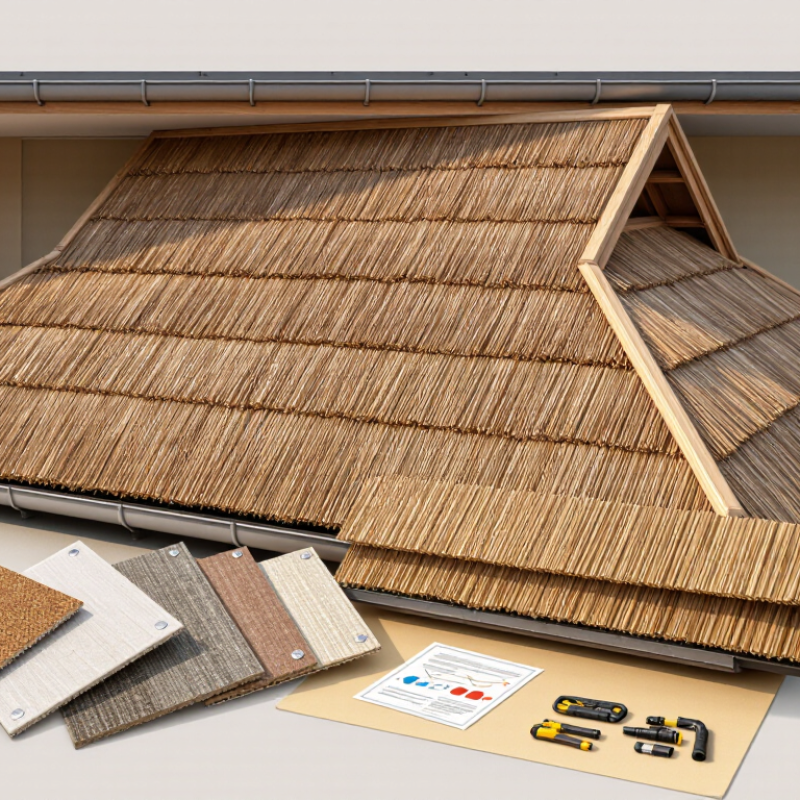
Appearance also matters. Decide whether you want a dense tropical look, a lighter texture, or mixed lengths. Request physical samples, because online color images often mislead. Compare thickness, backing quality, edge finishing, and color variation under daylight. Your first quantity estimate may be wrong. Add a realistic allowance for cutting, overlaps, and damaged pieces, but avoid excessive waste. Ask the supplier for installation guidance, compatible accessories, replacement availability, and written warranty terms. A reliable supplier should answer specific questions patiently and disclose product limitations. Cheap materials may look attractive initially. They can become costly when fading, poor drainage, or difficult installation appears later.

Compare Synthetic Thatch Materials and Product Designs

Choosing a synthetic thatch supplier requires comparing material composition, construction, and product design—not only appearance. Polyethylene and polypropylene are common options, but their performance varies with density, UV stabilizers, and backing systems. A reliable supplier should provide test data for color retention, tensile strength, water absorption, and fire behavior. ASTM E108 or UL 790 test references can clarify roofing performance, although test results may not represent every installation condition. Ask for full reports, not vague “weatherproof” claims.

Design also affects durability. Multi-layer panels with reinforced backing usually resist wind uplift better than loose, single-layer bundles. Interlocking modules can reduce visible gaps around roof edges and curved structures. However, heavier products may increase framing demands. The 2023 Global Status Report for Buildings and Construction states that buildings account for about 34% of global energy demand, making material selection increasingly important. A lighter synthetic roof may reduce structural material, but its embodied plastics and eventual disposal still require scrutiny. That trade-off is easy to overlook.

Request samples before ordering. Check the underside, seam strength, color consistency, and how tightly the strands recover after bending. Some products look natural from three meters away. Up close, they may appear too uniform. Suppliers should disclose recycled content, expected service life, maintenance needs, and installation limits. Independent laboratory evidence is stronger than catalog language. Availability also matters; a replacement panel that cannot be matched later becomes an expensive design flaw.

Evaluate Supplier Quality, Experience, and Manufacturing Standards

How to Choose the Best Synthetic Thatch Supplier?

Supplier quality begins with measurable evidence, not attractive photographs. Ask for material specifications, UV-resistance data, colorfastness results, and water-drainage details. Manufacturing standards should include batch tracking, consistent fiber density, and documented quality inspections. A reliable supplier can explain how products perform under heat, heavy rain, and strong coastal wind. Vague answers deserve caution.

Experience also matters. Review completed installations with similar roof shapes, climates, and project sizes. Ask whether the supplier supports installation training, replacement guidance, and realistic warranty terms. Experienced teams usually understand ventilation, fixing methods, and maintenance needs. Their advice should be practical, not purely sales-driven. One overlooked issue is color variation between production batches. It can affect large roofs noticeably.

Tips: Request a physical sample before ordering. Compare its texture, backing, thickness, and edge finish. Check independent test documents, but confirm their scope and date. Speak with installers who have handled the material. A polished brochure proves little. Factory cleanliness, inspection records, and clear communication reveal more. No supplier is perfect, and even strong products may need replacement after severe exposure. Ask difficult questions early. That small effort can prevent expensive corrections later.

How to Choose the Best Synthetic Thatch Supplier?

Compare suppliers by evaluating product quality, technical testing, manufacturing standards, experience, documentation, and delivery capability.

This 100-point evaluation model gives the greatest emphasis to consistent product quality, weather and UV resistance, and documented manufacturing standards. Use it as a practical checklist when comparing supplier proposals.

Review Pricing, Warranties, Delivery, and Customer Support

Choosing the best synthetic thatch supplier requires more than comparing the lowest price. A cheap quote may exclude trim, fasteners, delivery, or installation guidance. Request an itemized proposal with material quantities, shipping costs, taxes, and expected labor requirements. Compare equal specifications, including color, panel thickness, UV resistance, and fire performance. Ask for a physical sample. Details matter.

Examine the warranty carefully. Confirm its length, coverage, maintenance conditions, and exclusions for fading, storm damage, or incorrect installation. A ten-year warranty sounds impressive, but it may cover only the product and not replacement labor. Request the warranty in writing before paying a deposit. Also ask how claims are handled and which documents are required. Small print matters more than promises.

Delivery planning can prevent expensive delays. Ask whether the material is in stock, how it will be packaged, and whether tracking is provided. Confirm that the delivery address supports large vehicles. Inspect the shipment immediately for crushed edges or missing components. I have underestimated packaging damage before, and correcting it delayed a project. Customer support should remain available after payment. Send a practical question before ordering and observe the response time. Clear answers usually indicate stronger preparation, although no supplier communicates perfectly. Keep every quotation, email, and delivery record for reference.

How to Choose the Best Synthetic Thatch Supplier? — Pricing, Warranties, Delivery, and Customer Support Review
Supplier Profile Typical Material Price
per sq. ft.
Typical Installed Price
per sq. ft.
Product Warranty Typical Lead Time Minimum Order / Customization Customer Support Key Advantages Potential Limitations Best For Overall Fit
Direct Synthetic-Thatch Manufacturer US$8–US$20 US$15–US$35 10–25 years against manufacturing defects; UV and fire coverage varies by specification 2–8 weeks for standard products; 8–16 weeks for custom orders Often pallet-based ordering; color, profile, density, and edge details can usually be customized Technical drawings, installation guidance, sample requests, and project quotations are commonly available Better product traceability, larger production capacity, and more consistent batch quality May require larger orders; international freight, taxes, and unloading costs may be excluded Hotels, resorts, commercial developments, and large residential projects ★★★★★
Specialist Roofing Contractor US$10–US$24 US$18–US$40 Usually 5–15 years for materials; workmanship warranty may range from 1–5 years 3–10 weeks, depending on crew availability and material sourcing Low to moderate order quantities; site measurements and design adaptation are usually included On-site inspection, installation supervision, maintenance advice, and local service are typical Single-point responsibility for measurement, installation, detailing, and after-sales service Higher labor costs; quality depends heavily on installer training and project management Projects where installation quality and local accountability are priorities ★★★★★
Regional Building-Materials Distributor US$9–US$22 US$16–US$34 Commonly 10–20 years, subject to the original manufacturer's terms 1–6 weeks for stocked items; longer for special-order products Generally low minimum quantities; limited customization compared with direct manufacturers Order processing, inventory support, and basic product documentation are generally available Shorter domestic delivery times, easier replacement orders, and simpler payment arrangements Product selection may be narrow; technical support may be less specialized Small and medium projects requiring convenient regional supply ★★★★☆
Online Construction-Materials Seller US$7–US$19 Installation often arranged separately: approximately US$7–US$18 additional per sq. ft. Typically 5–15 years; terms must be checked before purchase 3–14 business days for stocked items; 4–10 weeks for made-to-order products Low minimum quantities; customization is usually limited to listed sizes and colors Email or chat support is common; detailed engineering and installation assistance may be limited Easy price comparison, transparent product listings, and convenient purchasing for small orders Product specifications, certifications, and return conditions may require careful verification Small renovations, sample orders, garden structures, and budget-sensitive buyers ★★★☆☆
Custom Fabrication Workshop US$14–US$30 US$25–US$50 Usually 5–15 years, depending on materials, design, and environmental exposure 6–16 weeks, including design approval and fabrication Higher minimum order or setup fees; extensive shape, color, and dimensional customization may be possible Design consultation, prototypes, shop drawings, and specialized fabrication support are commonly offered Suitable for unusual roof geometry, themed architecture, and highly specific visual requirements Higher cost, longer production time, and replacement pieces may require a new fabrication run Custom hospitality, entertainment, heritage-style, and architect-led projects ★★★★☆
Sustainable or Recycled-Content Supplier US$10–US$25 US$18–US$40 Commonly 10–20 years; verify UV, moisture, and fire-test coverage 4–12 weeks, depending on material availability and production scheduling Moderate minimum quantities; recycled-content percentages and color ranges may vary by batch Environmental documentation, material declarations, and technical data are often available Can support sustainability targets, material reporting, and green-building documentation Price and color consistency may vary; environmental claims should be supported by documentation Eco-conscious developments and projects with documented sustainability requirements ★★★★☆
Import-Focused Wholesale Supplier US$5–US$15 US$13–US$30 Often 5–15 years; claim procedures and exclusions should be reviewed carefully 6–16 weeks by sea; air freight is faster but substantially more expensive Usually higher minimum order quantities; product specifications may be adaptable for repeat orders Remote support is common; local installation and warranty assistance may not be included Competitive unit pricing and access to high-volume production capacity Freight, customs, currency changes, inspection, and replacement logistics increase project risk Large, well-planned orders with experienced procurement and quality-control teams ★★★☆☆
Indicative market ranges only. Final costs depend on roof design, coverage density, underlayment, fasteners, fire-rating requirements, site access, labor rates, freight, taxes, and local building codes. Request a written quotation that separates materials, accessories, delivery, installation, testing, and warranty conditions.

Verify Samples, Certifications, and Supplier Reliability

How to Choose the Best Synthetic Thatch Supplier?

A convincing brochure is not enough. Request a full-size sample, not only a small color card. Examine the backing, stitch density, edge finish, and attachment points. Leave the sample outdoors for several weeks. Check fading, brittleness, water drainage, and odor after rain. I once rejected a visually attractive sample because its backing curled in afternoon heat. Small details can expose expensive problems.

Ask for certificates that match the exact product and factory. A fire report should identify the tested assembly, thickness, and installation method. Relevant standards may include EN 13501-1 or ASTM E84, depending on the project location. Quality-management certification, such as ISO 9001, can support process control, but it does not prove durability. Read the test date and laboratory information carefully. Documents can be valid yet irrelevant. The 2023 UNEP Global Status Report for Buildings and Construction reported that buildings used 34% of global energy and produced 37% of energy and process emissions in 2022. Durable materials deserve careful verification.

Supplier reliability needs evidence beyond promises. Request batch records, production photographs, written warranty limits, and three recent project references. Confirm replacement-part availability and realistic lead times. Call a reference and ask about color consistency after one summer. Ask who handles failures. That answer matters. A factory may provide excellent samples but inconsistent production. My own weakness is trusting polished documentation too quickly. An independent inspection before shipment is often worth the added cost. Keep every approval in writing.