Leave Your Message
Choosing Synthetic Roof Thatch in 2026 requires more than comparing colors, textures, and advertised prices. The right system must suit the building’s climate, roof pitch, drainage design, fire-safety requirements, and expected maintenance schedule. A tropical resort near the coast faces salt air, intense sunlight, and heavy rain. A countryside guesthouse may need stronger resistance to frost, wind, and moss.
Synthetic Roof Thatch specialist John O’Connor offers a practical reminder: “A roof should look natural from the ground, but perform predictably in severe weather.” That principle guides this article. Appearance matters, but it should never hide weak fasteners, poor water shedding, or unclear warranty terms. Examine sample panels closely. Check how the fibers overlap. Ask whether the color remains stable after years of ultraviolet exposure. Small details matter.
There is no perfect product.
Some lightweight systems install quickly, yet they may feel less convincing at close range. Denser products can create a richer texture, but they may require stronger structural support and more labor. This is where buyers often make mistakes. They choose the most realistic finish, then discover that installation costs exceed the original budget.
This guide explores the decisions that deserve careful attention in 2026, including material composition, fire performance, wind resistance, drainage, lifespan, installation quality, and long-term value. It also questions common marketing claims. A roof can look beautiful in a showroom and still perform poorly on a wet, exposed building. Reliable selection begins with evidence, not attractive photography.
Synthetic Thatch Types and Their Best Applications in 2026
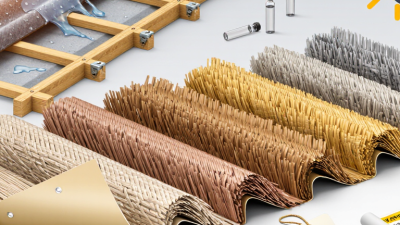
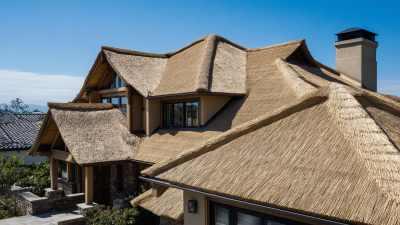
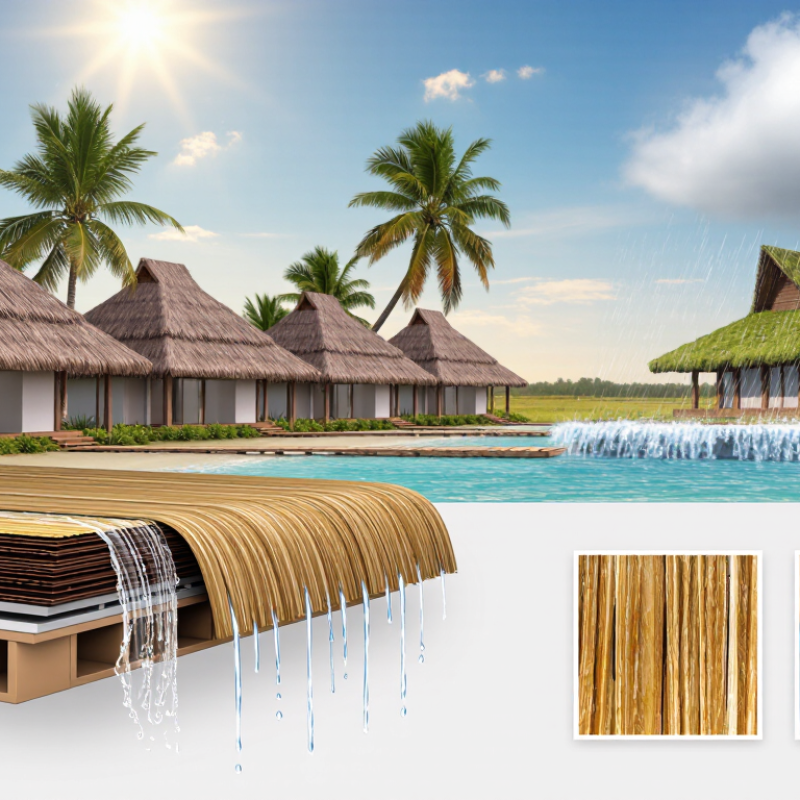
Synthetic thatch is no longer a single roofing product. In 2026, buyers can choose molded panels, interlocking tiles, or bundled strands. Polyethylene and polypropylene systems usually provide consistent color and lower maintenance. PVC-based tiles can create sharper edges and denser textures. Molded panels suit restaurants, pool bars, and garden rooms because installation is relatively quick. Bundled synthetic reeds look more natural from close range, but they may require more careful fixing in windy areas.
Mordor Intelligence’s 2024 Roofing Materials Market report estimated the global market at about USD 146 billion. This wider roofing trend supports demand for durable decorative materials, though it does not measure synthetic thatch alone. Choose products with tested resistance to flame spread, ultraviolet exposure, and water absorption. ASTM E108 and EN 13501-5 are useful reference points, but local approval requirements still matter. A 2023 roofing survey by Dodge Construction Network also highlighted material durability and labor efficiency as major project concerns. That matches field experience: a beautiful roof becomes expensive when every damaged panel needs custom replacement.
Tips: Match the type to the setting. Use dense molded tiles for commercial roofs and bundled strands for visual realism. Request test reports, installation drawings, and spare-piece availability. Check color samples outdoors; showroom lighting can hide fading. I would also inspect the underside, because weak backing often reveals the product’s real limits.
| Synthetic Thatch Type | Typical Material Construction | Typical Appearance | Recommended Roof Pitch | Typical Service-Life Range | Weather and Fire Characteristics | Best Applications in 2026 | Main Selection Advantage | Key Limitation |
|---|---|---|---|---|---|---|---|---|
| Synthetic Water Reed Thatch | UV-stabilized polymer stems, usually formed into reed-like bundles or panels | Fine, uniform reed texture with a light-to-medium natural thatch tone | Generally 30° or steeper, subject to the installation system | Approximately 15–25 years with correct installation and maintenance | Good resistance to moisture, insects, rot, and ultraviolet exposure; fire performance depends on the tested assembly and local approval | Resort villas, poolside structures, garden rooms, restaurants, and tropical-style residential roofs | Lightweight appearance and consistent coverage | Fine reed profiles may show less depth than thicker natural-thatch alternatives |
| Synthetic Long Straw Thatch | Textured polymer fibers or molded strips arranged in longer overlapping courses | Long, layered strands with a relaxed traditional thatch appearance | Generally 30° or steeper, depending on the fixing method | Approximately 15–25 years | Designed to resist water absorption, biological decay, and fading; fire rating must be verified for the complete roof system | Country-style homes, heritage-inspired renovations, farm stays, lodges, and themed hospitality buildings | Creates a deep, handcrafted visual effect with relatively predictable installation | More visible overlap lines can require careful layout and detailing |
| Synthetic Water Reed Tile or Panel | Interlocking or fixed polymer panels with molded reed or straw profiles | Regular tile-like courses with a neat, repeatable pattern | Often suitable from approximately 25°–30°, according to the product design | Approximately 20–30 years | Good resistance to rain, humidity, insects, and sunlight; tested fire classification varies by product and supporting roof build-up | Large commercial roofs, public venues, pergolas, pavilions, and projects requiring faster installation | Rapid coverage and consistent alignment across large roof areas | Repeating modules may look less individually handcrafted than bundled systems |
| Synthetic Palm Thatch | UV-resistant polymer leaves, layered palm fronds, or palm-look modular panels | Broad tropical leaves with pronounced texture and strong visual shadowing | Generally 25° or steeper, subject to the roof design and fastening system | Approximately 10–20 years, depending on climate and exposure | Good resistance to humidity, mold, insects, and salt-laden air; wind and fire performance must be confirmed for the installed system | Beach resorts, outdoor dining areas, tiki-style bars, leisure facilities, and tropical landscape structures | Strong tropical identity and effective visual coverage | Leaf edges can require periodic inspection in high-wind or high-UV locations |
| Synthetic Heather or Brush Thatch | Dense polymer fibers or narrow strips assembled into brush-like layers | Compact, textured surface with a darker and more rustic profile | Generally 35° or steeper for effective water shedding | Approximately 15–25 years | Low water absorption and good resistance to decay; the rough surface and fire behavior require project-specific testing | Rural retreats, woodland cabins, eco-lodges, garden shelters, and rustic hospitality projects | Provides a dense, natural-looking texture and strong visual depth | Usually needs a steeper roof and more detailed installation than panel-based products |
| Synthetic Mixed-Fiber Thatch | A blend of polymer strands, molded strips, and textured fibers designed to imitate varied natural thatch | Layered, irregular appearance with a broad range of color and texture options | Typically 30° or steeper | Approximately 15–30 years | Can offer balanced resistance to UV exposure, rain, insects, and biological decay; performance depends on the formulation and roof assembly | Custom residences, destination resorts, themed buildings, visitor centers, and visually prominent roofs | Offers the most flexibility for matching a desired regional or architectural style | Higher material complexity may increase cost and make repairs less uniform |
| Synthetic Thatched Ridge and Trim Components | Preformed polymer ridge caps, hip pieces, verge elements, and finishing accessories | Designed to blend with the selected roof thatch while creating a finished ridge or edge | Matched to the pitch and geometry of the main roof | Approximately 15–30 years when compatible with the main system | Helps protect vulnerable roof junctions; wind, water, and fire performance depend on correct fixing and compatibility | Ridges, hips, verges, dormers, roof transitions, and detailed architectural projects | Improves visual continuity and simplifies difficult finishing details | Must be selected as part of a compatible system rather than as a standalone covering |
Note: Service-life ranges, roof-pitch guidance, wind resistance, and fire performance are typical planning values rather than guarantees. Always confirm the manufacturer’s tested system data, local building regulations, fixing requirements, roof ventilation design, and exposure conditions before specification.